Growing Lemons in Zone 5 and Other Crazy Hobbies


It is nearly time to move my citrus trees in for the winter. I have a lemon, lime and orange in pots which spend the summer outside, then move inside when it is cold. The dream is one day to get a supply of homegrown citrus. 

There's new growth on the lemon tree, and we hope it blooms this winter.

The reality is disappointing. One year we had quite a few oranges, and tremendous blossoms in January, but that was when the plants came to school with me- I had a classroom with north windows, and it wasn’t heated at night, and I think that was the perfect climate for them.  I changed schools, and my current classroom doesn’t have windows ( I wonder what they were thinking, those school building designers of the late 60’s- “I know, those kids are getting distracted by looking out the windows, so lets make it so they can’t!”) so I have to cram them into the boy’s room, which has the best south and west windows, and hope for the best. They are all three in 14 in diameter pots, and some years they bloom and produce a few fruits, but I am a looong way from self-sufficiency in citrus.

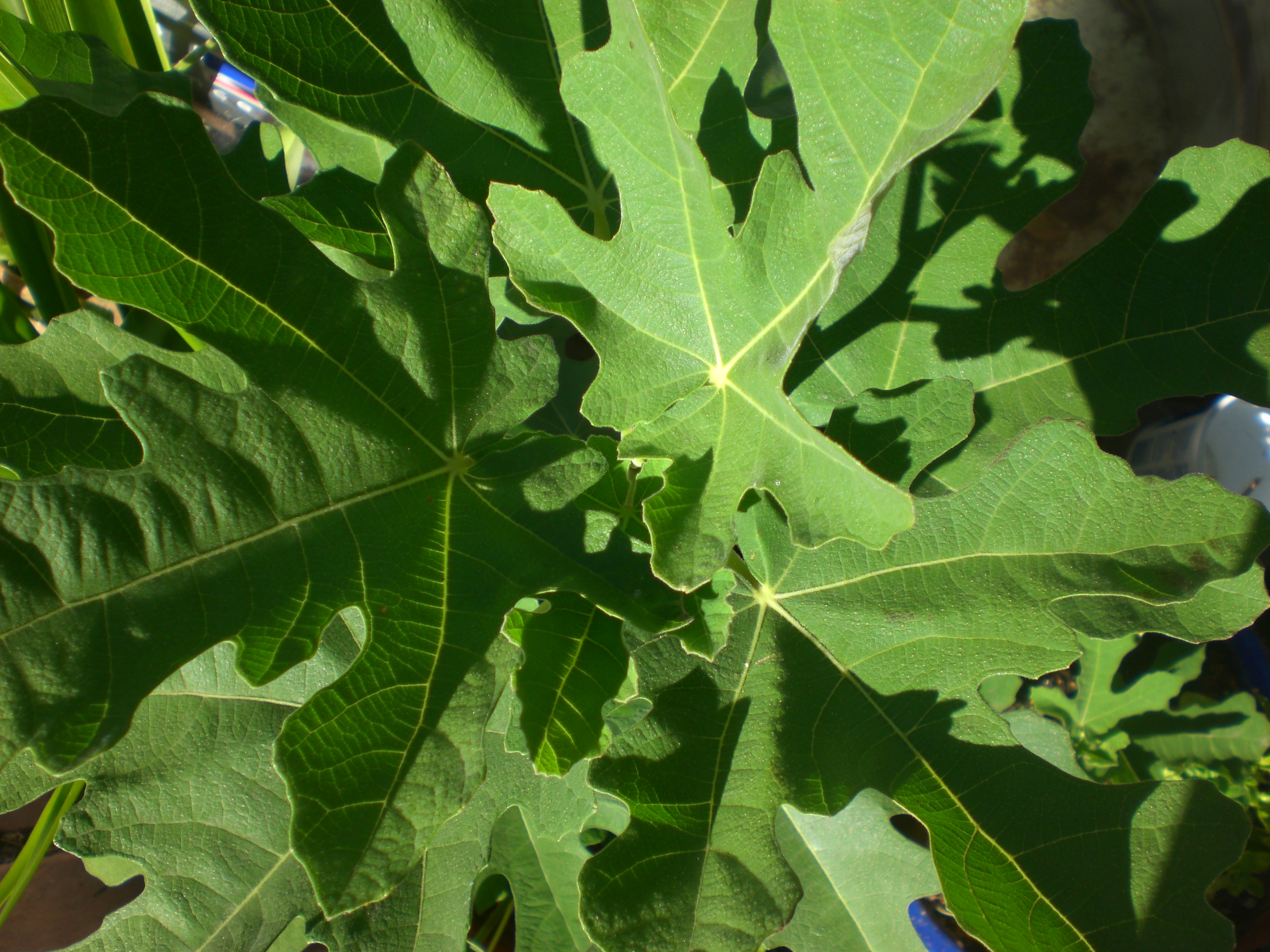
Last year I added another edible plant which won’t survive the winter here, a Chicago Hardy Fig.(www.raintreenursery.com)    It arrived at the end of the summer, a twig smaller than a pencil with two leaves and a hefty bundle of roots.  The half  page of instructions said:  pot immediately, not let it get colder than 20, and when it went dormant bring it inside to a cool, dark place, keep it moist, but not wet, then bring it into the daylight when there was no longer risk of freezing temps. It was complicated, and made me a little nervous, but the plant made it through the winter, and is currently alive. 
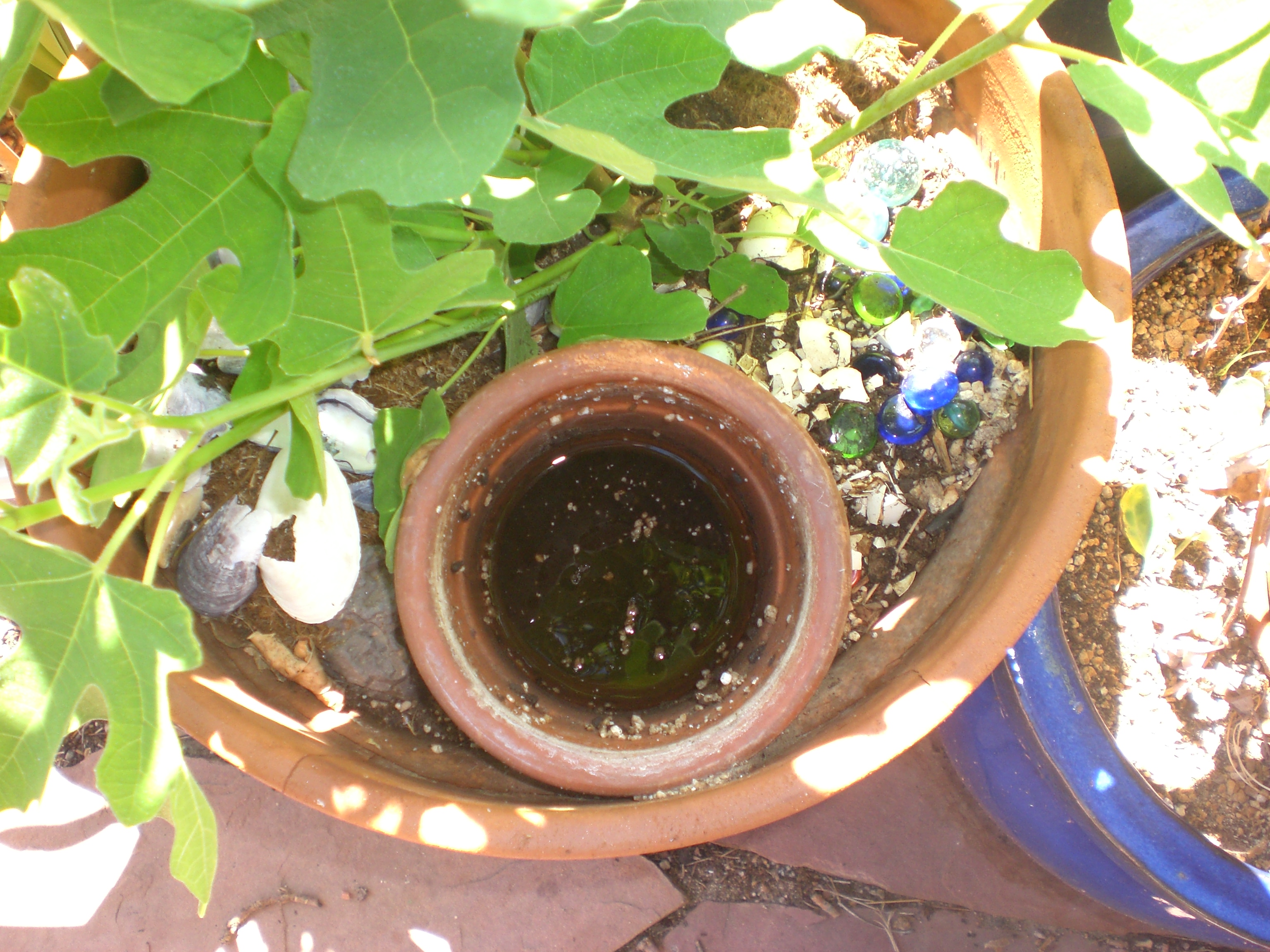
A porous clay vase turns any pot into a self watering container- it holds about 1/2 gallon, and seeps into the soil slowly.

I set up a large clay pot with a porous clay vase inside- the vase holds about ½ gallon of water and slowly seeps through to the soil. While it is outside I fill it every few days.  I kept it in our guest room in the basement last winter, with the twig under a flowerpot to keep it genuinely dark, and periodically filled the vase with water.  In April, I peeked at it, and saw that there were white buds popping, so I moved it to the back porch, ready to bring it inside when frost threatened.

It has grown beautifully all summer. I didn’t expect fruit for a few years, but there are 2 tiny figs on it. It is probably 18 inches tall, and sometime in October I’ll bring it down to the basement again, to start the process again.

Pomegranates might be next on my list of impossible fruits for Colorado- what else?
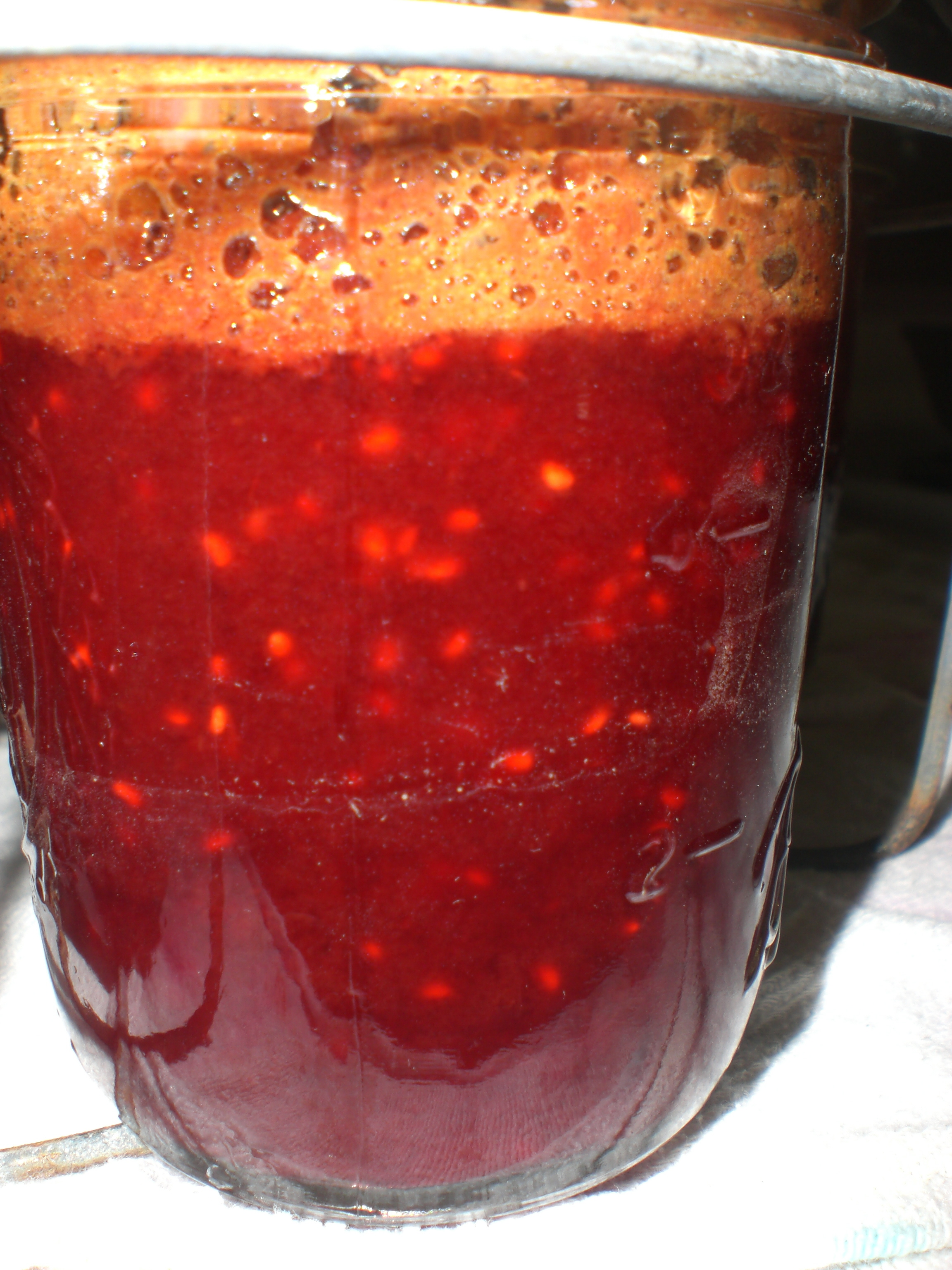
Why homemade jam? Why not?


You're supposed to skim the foam off to make it prettier, but I didn't.

Our first jar almost finished- 6 days after it was made.

Even though only the girl and I are eating this stuff, we are zooming through it. Looking for excuses to put jam on stuff. You know, I could go for a piece of toast right now.

So, in a world where you can buy jam at the store, where there is a whole grocery aisle devoted to it, why bother making it at home?  I’ve been thinking this a lot lately, as I’ve been making bread, buttermilk, soup stock, lots of  stuff from scratch that my mom, for instance, never made. What do you make from scratch?

The short answer is that I enjoy it, mostly.  It feels good to have stock bubbling away in the crock pot, and then turn that stock into soup. It is kind of fun to stir fruit and watch it bubble and thicken in a pan, then spoon it into jars. 

Cost enters into it as well- buttermilk costs 4 times as much at the store as it does to add some old buttermilk to fresh milk and let it culture. Once you have started a jar, you have a lifetime supply.  I did a little research on line to see what organic raspberry jam would cost, and prices varied from $4-$9. I would never pay that much for jam.  As it is, the berries were from my garden, so free ( ha ha, if you don’t count the labor and the water…) the pectin was about $3 for 6 jars, and it was probably $2 worth of sugar. 

The quality is the last, best answer.  The reason I couldn’t find the price of raspberry chocolate jam is that no one appears to sell it. And it is reallllly good.  To make it, I add a tablespoon of  cocoa powder to the recipe on the insert of the pectin package, and follow the other directions as stated. It could probably be done with cherry or strawberry, too. Experiment.

Work Day


As much as I would like to sit back in my Adirondack chair in the shade, I’ve got to get some work done today. First project, patch the soaker hose that snakes through the shrub bed south of the apple tree. I’m thinking duct tape. I’ll let you know how that works out. I cut it accidentally when I planted Lady’s Mantle this spring. We got so much reliable rain this summer, that I didn’t even use the soaker until a couple of weeks ago, then I turned it on and heard the gurgling and saw the mud.
After patching, I’ll water, and weed- it’s always easier to weed when the ground is wet, although it is never really easy. I hope sometime this afternoon I’ll get some time in the shade in that chair.

I can rest in the shade later.

More compost than you know what to do with?


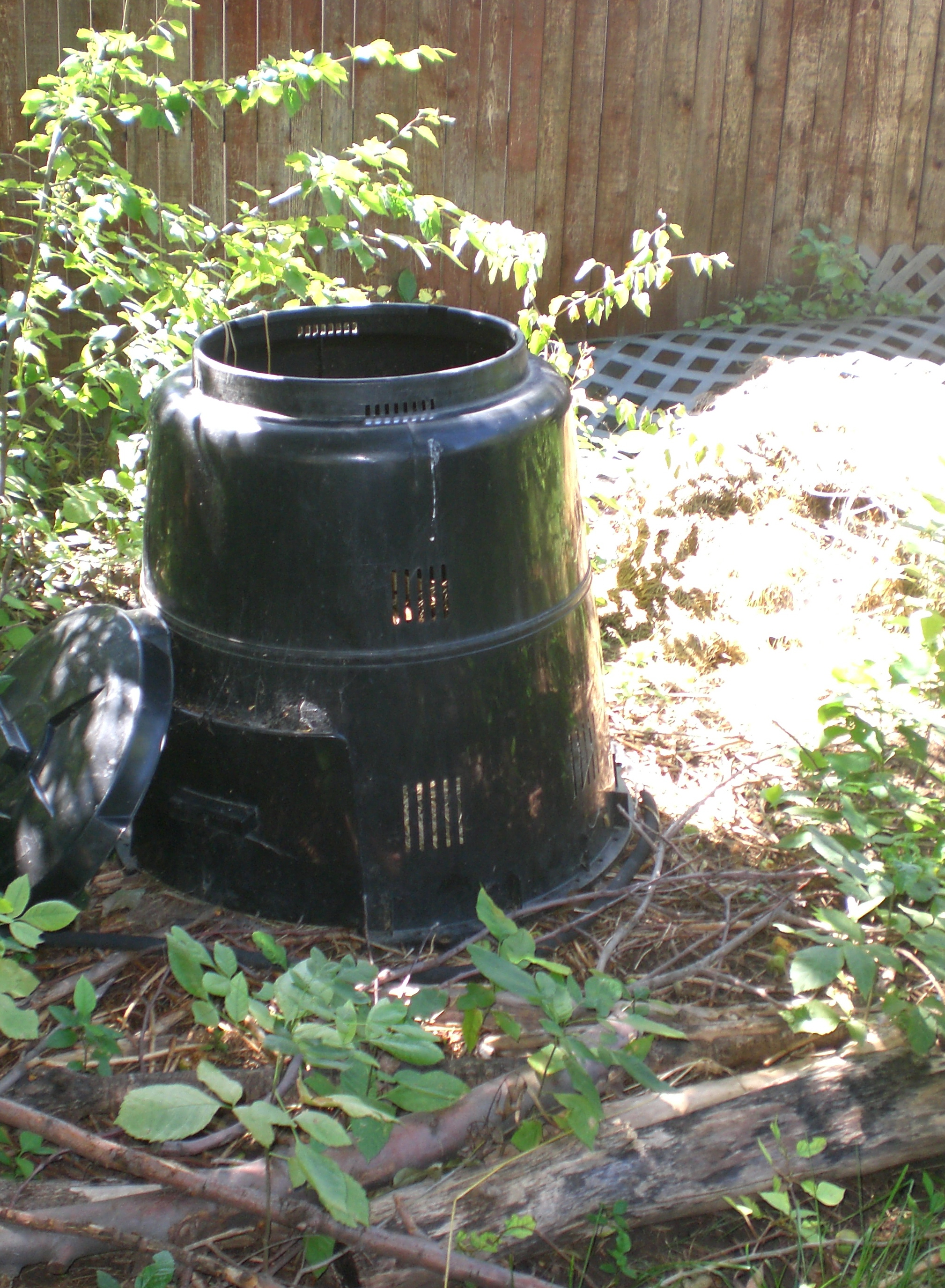
"Luke, I am your compost bin..." "NO!! thats impossible!"

“Do you ever find that you have more compost than you know what to do with?’ My colleague Lindsey asked me this one winter day a few years ago. I tried to keep my cool, tried not to frighten her as I thought about how to get this bounty of excess compost into my pick-up truck.  Lindsey and her family are vegetarians, and they don’t garden. They keep a compost pile for environmental reasons.  I am not a vegetarian, I do garden, and I can never get enough. 

            “Too much compost eh? Well, I could take some off your hands…” I didn’t quite rub my hands together and laugh evilly, but it was close. In talking to her, it turned out she didn’t have too much, it is just that her bin is small, and decomposition had slowed down in the winter, but she and her family were still producing potato peels, apple cores and other vegetable matter.  I advised her to move the bin to a new location, spread the half-finished compost under her trees, and put the new material into the bin in the new location.    

            I have two compost piles, and never enough compost for my desires. I spread it on my vegetables, around my flowers and shrubs and herbs. The rough, chunky unfinished stuff becomes mulch. The finished stuff, the compost you read about in garden books, goes into my containers mixed in with potting soil, and it goes in the holes for new plantings, to add humus to the soil and give plants a jumpstart. People say I have a green thumb- I owe it all to compost.

            One of my bins is black plastic- I bought it from the city a few years ago. It looks like Darth Vader is buried up to his neck in my yard. (link to compost bin?) It would look cool, if that were the look I was going for. It isn’t, so I try to hide it behind a tree.(link to self)  The black plastic helps the bin heat up, speeding decomposition.  In the summer, at the height of weed season, I can stuff the bin full, hose it down and put the lid on. In a week, when I have another trash barrel full of weeds, there is already room for it.  The bacteria and fungi in the bin have eaten up the organic matter so quickly that it breaks down by half in only a week.  It’s amazing, even if it is a little gross.

            My second bin is enormous. The design is my brother’s invention- two plastic lattice panels wired together into a circle five feet in diameter and four feet tall.  If you read the same books I do, you know that a compost bin has to be at least 3 feet in all dimensions in order to heat up enough to kill weed seeds.  My lattice bin holds about 2 cubic yards, and heats up so effectively that I have never been able to fill it. I can add bag after bag of leaves in the fall, barrel after barrel of weeds in the summer, and it just continuously boils down. 

            On a  sunny day in the spring, I  spread out the finished compost, move the bins and start over.  This is the only work I do with my compost bins- some people do turn theirs, but I am not one of those people.  For a peek into another world of largescale compost production, see One Straw’s posts at htt[:/onestraw.wordpress.com .  If you have a yard cart that the trash trucks pick up, you probably pull weeds and rake leaves and then wheel that material to the curb. I just wheel my material to my bins and dump it.  The difference is, I get to keep the free compost.

what yoga is teaching me about pulling weeds


Every summer, it would be the same thing- I would spend an evening plling the weeds out of the garden, then limp into the house, stretch out on the living room floor, and moan about tweaking my back. There would be a sore spot, always on the right hand side, and I would feel it for a few days, then go right back to pulling weeds, re-injuring myself over and over.
This summer, I have been doing yoga, taking a class about twice a week, and doing a little practice on my own on the in-between days. Here’s what I’ve learned:
1. “Halfway lift and lengthen” there’s a move we do, hanging like a rag doll, bent at the waist, where we lift up halfway, to get a flat back, and lengthen the spine conciously. This has helped so much while I’m out getting at the bindweed under the burr oak. I’ll stretch and pull, then conciously, “halfway lift and lengthen.” It strengthens my back, takes the curve out of my spine and prevents the tweaks.
2. Sweat is good for you- I’ve been doing Vinyasa yoga, where the studio is heated to at least 80 degrees. Easy in the summer- it’s been cooler inside the yoga studio than out, but I come out of class wringing with sweat, and it feels so good. Gross, but good. Same with weeding. Pulling up the thistles before they go to seed, lugging buckets to the compost pile- it isn’t exhausting. It shows me how strong I am and how much stronger I’m getting.
3. Gardening is a practice. There won’t be a time when I’ll “know yoga” and be finished. It is something I can continue to do and get better at my whole life, if I’m lucky. “Landscaping” is something that can be installed and finished, but a garden is a process- I pull up the weeds between the flagstones knowing they’ll come back. Mother nature bats last- there will always be more seeds coming along, and the roots of the perennial mallow stretch way down. I can look at it as a never ending battle, or I can look at it as a practice, something I’ll be able to do the rest of my life, if I’m lucky. The plants are collecting sunlight, protecting the soil from erosion, and once I pull them, providing me with material for compost. So, breathe, stretch, pull, halfway lift and lengthen, and get that bindweed before it goes to seed.

Simple Pleasures


I love my new watering can. Shortly before mother’s day, we strolled into Jax, which is a curious hybrid- farming/camping/ military surplus/ high end housewares store. There was a display of galvanized watering cans out front, and I said, ooooh, and made goo goo eyes at them. My husband took a risk, (I am hard to buy gifts for, did I make goo goo eyes seriously, or was I being ironic? is it wrong to give a practical gift, or should the mother’s day gift be gushy and romantic?) anyway, he took a risk, and bought it for me, and it is even better than I expected. It is my new favorite gardening tool.
I use my pond as a garden water source sometimes- I’ll dip a watering can in and spot-water my tomatoes, and any other new plantings that need it. Then, I use a hose to top off the pond, so the goldfish get fresh water, and the plants get lightly “fertilized” water with the chlorine burned off. This is absolutely the best watering can to use for this- it has a bucket handle, and a pour handle, the spout comes off at an angle very close to the bottom of the can. It is also well balanced, easy to carry, even when full- it holds about 2 gallons. Because the opening on top is so big, it fills very quickly when I plunge it into the water.
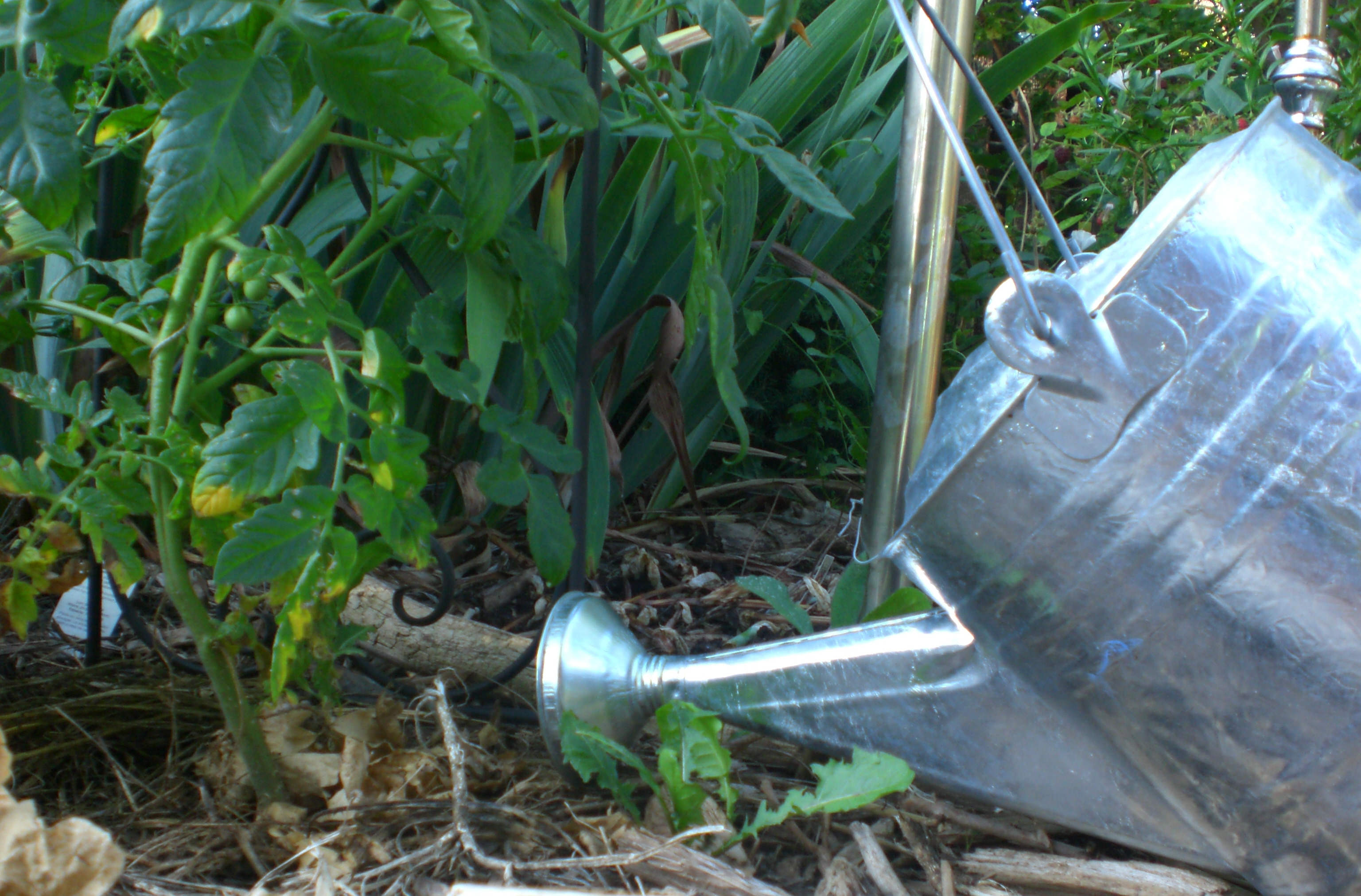
My favorite part, I discovered by accident. I was watering a tomato, and set the can down, hoping to kind of prop it up so it would still water for a minute while I pulled a weed. It balanced perfectly, tipped up, slowing pouring the 2 gallons of water out onto my tomato plant. I don’t have to stand around with a can in my hand any more, I can set up the water, pull some weeds, deadhead a few flowers, then refill the can and set it up again.
Why, you ask, don’t I just use a hose? I do, sometimes. I have a soaker hose set up in most of my beds, but really, most of my plants don’t need to be watered on a daily basis. Some, like the tomatoes, really do need water regularly. Some, like lavender, actually resents it. Rain water is enough for a lot of my herbs, and most of my “xeric bed” is set up to thrive on precipitation. Living in a semi-desert area, it works for me to just spot-water the things that need it. Your favorite gardening tool?

Propped up watering can

This is the can in action, soaking an Oregon Spring tomato plant. Yes, that's a dandelion right under the spout. I just pulled it.

Surprising Cilantro


I’ve been planting cilantro for years, enjoying the young, lower leaves in salsa, pad thai, and other yummy international dishes. I’ve always cursed when it would flower and go to seed, I’d pull it up and plant something else in its space. I even bought “large leaf” cilatnro seed, with promises from the seed catalog (oh, seed catalog writers, let me believe your sweet, sweet, lies…) that it was “slow to bolt.” Bolting means flowering and going to seed.
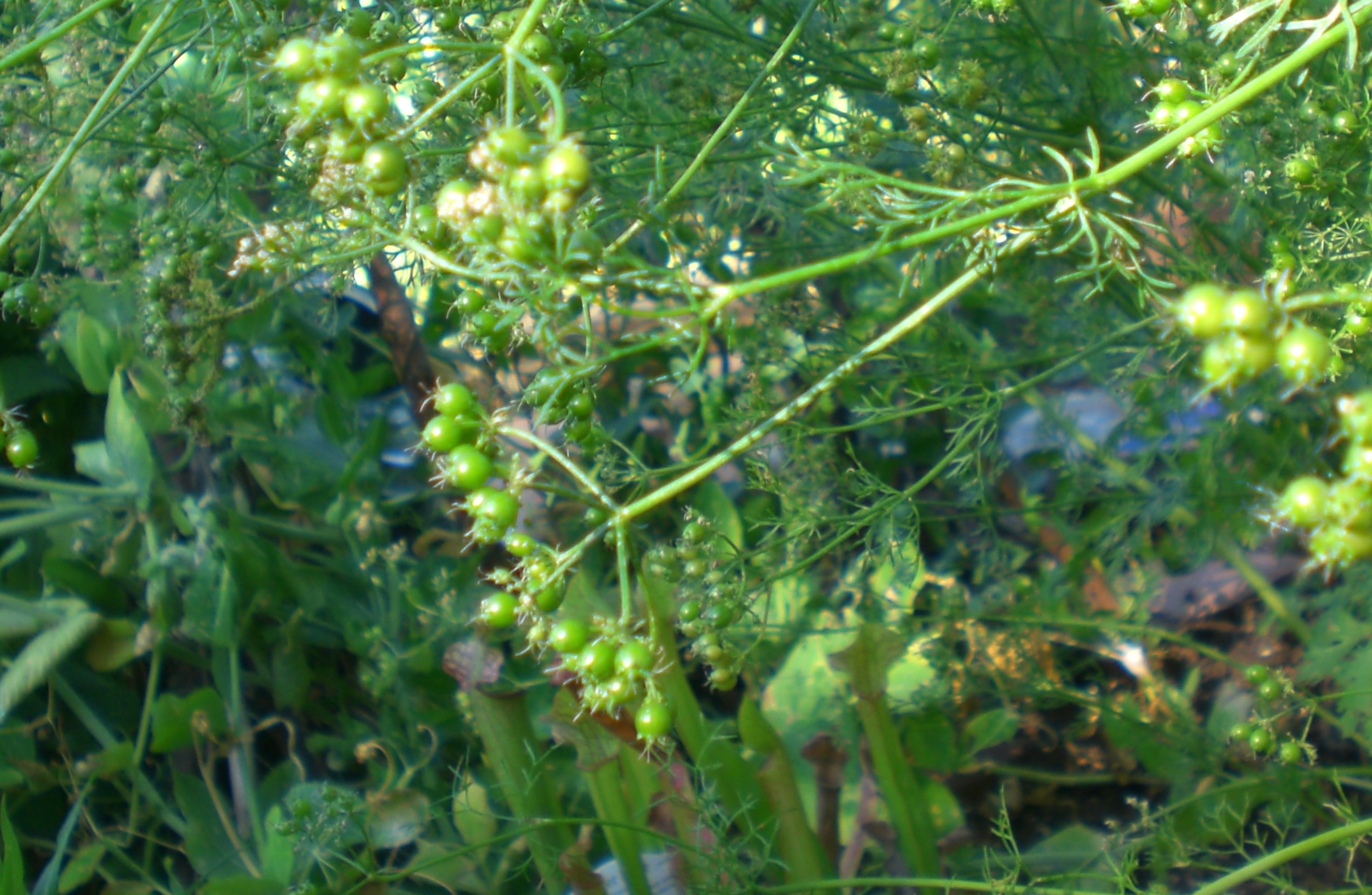
But this year, I let the cilantro in the boy’s garden flower, and it is lovely- cilantro is umbelliferous, cousin to carrots, queen anne’s lace and yarrow- beautiful white flowers that dance on the wind. Now, the seeds are forming, and once they turn brown, I’ll harvest the them. At this point, they’re called coriander, for some reason. I’ll plant some next spring, and use the seeds this winter to put in dry rubs, stir fries and maybe bread…I wonder if they’ll sprout, like alfalfa sprouts….that might be weird, actually,on a sandwich. Anyone tried sprouting coriander?

The leaves are called cilantro, and used in ethnic cooking

You can see why the type of plant is called "umbelliferae" the flowers come out of the stem in a shape like an umbrella.

Next Newer Entries