Vanilla Trellis Tutorial


Sweet little baby vanilla orchid- the pale green sticky-outy thing is an epiphytic root.

 I never believed I could grow a vanilla orchid without a greenhouse- credit the Botanic Garden (again- I’m a little obsessed with the place). At the very end of my visit there with my wonderful MIL, we went to the learning center at the children’s section. This place isn’t quite a greenhouse, but it has large south windows. There was a display of herbs and spices, and an employee was working on a plant in a container- wrapping a long vine around a tower made of chicken wire with sheet moss inside. I asked what it was, and actually said “Squee” when he told me it was vanilla.

In “Growing Tasty Tropical Plants,” (ooh, it’s overdue, need to renew it…) I learned that vanilla was not appreciably different from most of the tropical “houseplants” I currently have. Their major needs are something to climb on, filtered sun, and humidity.

The cage the guy was working on at the Botanic gardens supplies two of those needs- something to climb and humidity, because the sheet moss can hold moisture and slowly release it. Filtered sun it can get on the back patio in the summer, and in the Boy’s room in the winter.

I went home and promptly ordered a vanilla orchid plant from eBay, then set about designing my own humidity trellis.  Vanilla orchids don’t bloom until they get to be about 10 feet tall, but I didn’t want to create a ten foot tall cage, so I made mine modular, and figure the vine will wrap around, adding length without too much verticality. Once the vine gets to the top, I can make another tube, lash it on with cable ties, and be good to go.
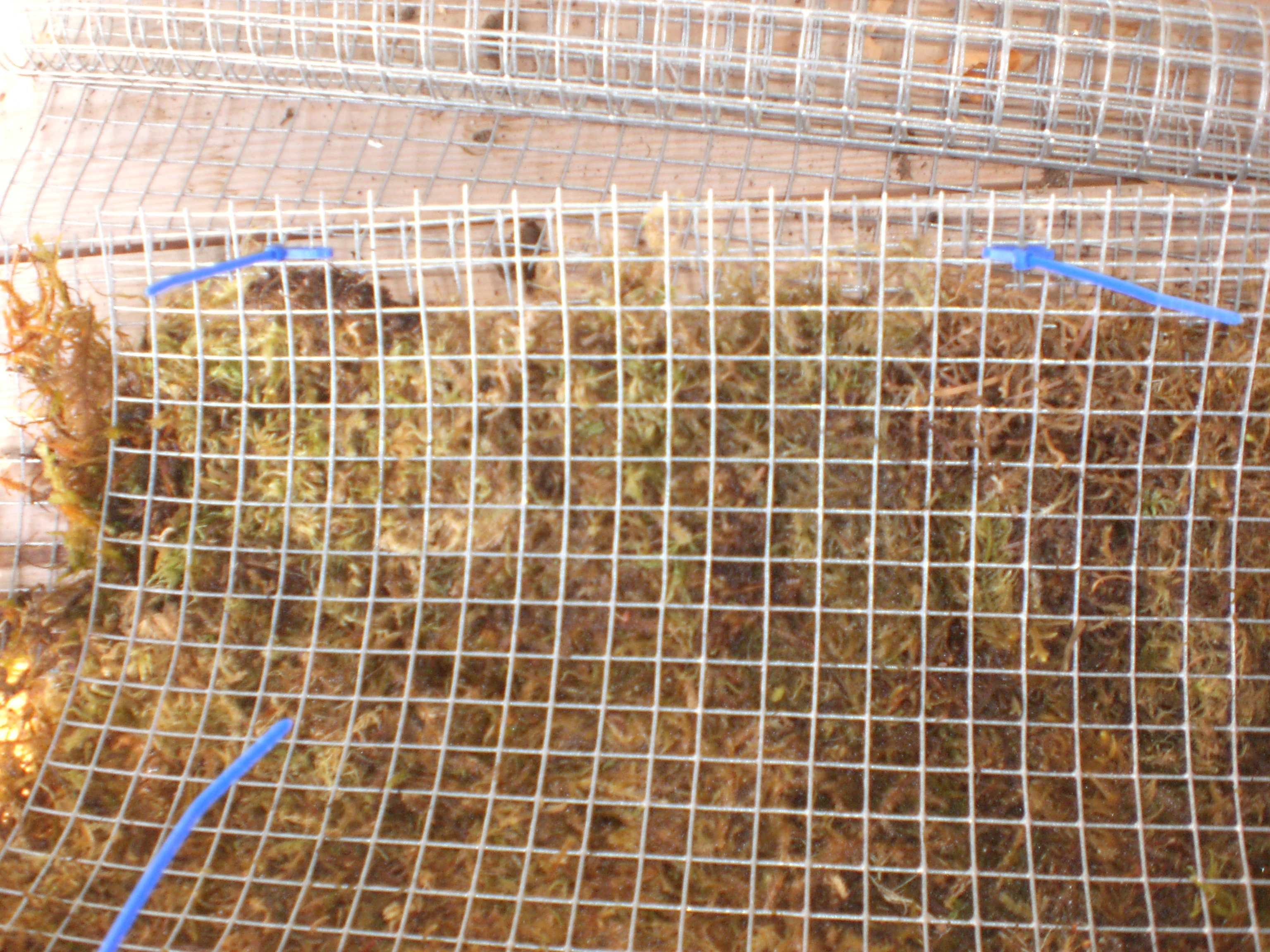
I used cable ties to connect the layers of mesh and sheet moss.

I had a roll of hardware cloth in the garage, and as I sketched and thought about it, I decided to make it like a quilt, with two layers of metal mesh that overlap in the center, leaving about 6 inches on either end, and a layer of sheet moss in the middle as batting. I stitched it together with cable ties. The humidity is supplied by a 1 liter pop bottle that sits on the shelf made of the inner layer of wire. I poked pin holes in the bottom. When I  fill it the water slowly drips down the tower, where it can evaporate.  In my first bottle, I poked too many holes, and the bottle drained in about 10 minutes. Ideally, it would be much slower. I have adjust the tightness of the screw top, so it slows it down, but it isn’t quite dialed in perfectly yet. The benefit to using a pop bottle is, I just have to check the recycle bin to get another one, poke fewer holes, and experiment.

I laid out about 12” of hardware cloth and cut it using wire cutters- I had to weigh it down so it would lie flat.

Lay out the green sheet moss- I got it wet so it would be easier to work with- I was outside on a windy day. I covered the bottom 18 inches of it but left the top bare.

Lay out the second piece of hardware cloth unevenly, so that the centers overlap, but there is about 6 inches on the bottom (this end will go into the flowerpot) and 6 inches on top (that’s where the water bottle will go.)

Quilt the layers together using cable ties. You could use wire for this, but I think it would be a pain- the hardware cloth wants to roll up, with cable ties you loop, then zip tight, and it goes pretty quickly. Usually my crazy frugality prevents me from buying something new for a project, but in this case, I went to the hardware store and bought cable ties- 2 dollars, and totally worth it.
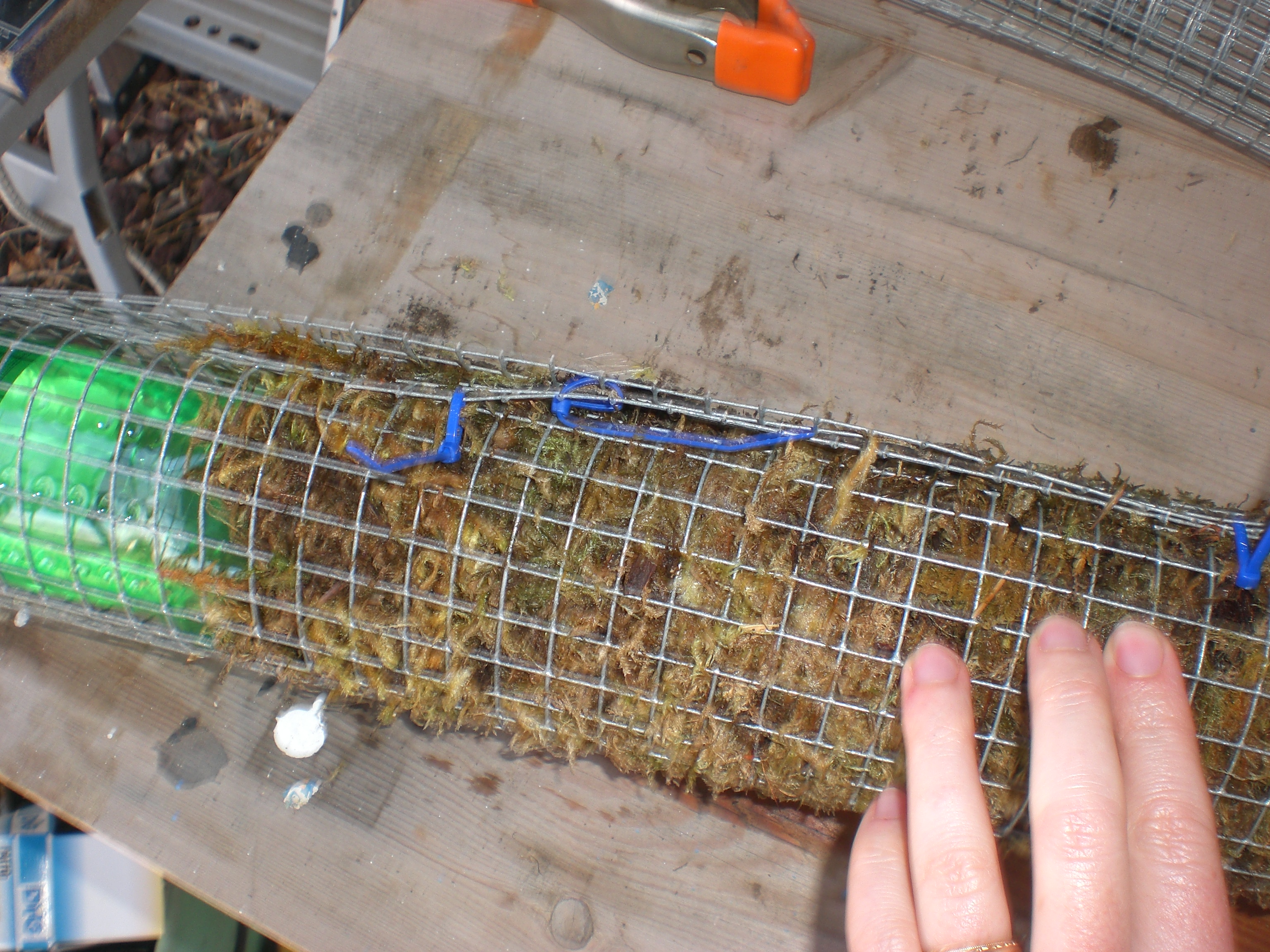
The bottle fits into the top, and the bottom goes into the pot for stability.

Roll up the quilt, using a pop bottle to make it the right size- the bottle will rest on the shelf created by the inner layer of wire. Use more cable ties to connect the ends together, and maybe spin the tie ends to the inside. I forgot, and they look kind of terrible. I guess I could trim them…

Put the trellis into your pot- I used a 10” diameter clay pot, then filled it with orchid mix. This is when it would have been good to have a helper- the orchid mix is chunky, too chunky to fit through the holes in the mesh, so it would have helped to have another set of hands to stabilize it. I put the trellis in, filled in and around with orchid mix, then I put the plant in, and added orchid mix to fill in the rest of the way.

 The plant is only about 4 inches tall now- once there is no frost danger, I’ll put it outside on the patio and watch it grow.

Inside-out Self-watering Pot


This pot has onion sets in a double row around the terra cotta resevoir. A 4" pot with salad greens goes inside it.

A couple of years ago, I was doing research on building do-it-yourself self watering pots- where there is a resevoir of water on the bottom of the pot, and through capillary action, the water wicks up through the soil, keeping the pot evenly moist. there are numerous designs, Gardener’s supply company sells the Earthbox, and people have posted other designs. with rubbermaid tubs, or recycled recycle bins. The one thing they have in common is they are butt ugly. I have spent money on pretty blue ceramic pots, and I don’t want to uglify my yard…
I did pay for one liner, from gardener’s supply, and thought about making more with bowls, and mesh, and PVC pipe…the whole idea made me tired.

Then I saw these terra cotta vases at Hobby Lobby- about 6 inches across, 10 inches tall, no drainage hole in the bottom, but unglazed, so they are porous.  They hold about 2 liters of water.

I bought one to start, and put it in a 14 inch pot, and put geraniums into the pot. They did great. The soil stayed evenly moist, and I was able to put a smaller pot on top of the vase, too.  Roots dangled into the water from above, and water continually seeps through the pores of the terra cotta. If you pour a half gallon of water into the soil of a regular pot, most of it drains out the bottom, and you need to water again the next day. Under my conditions (arid west, bright sun, YMMV) I can fill the resevoirs once or twice a week.

I now have 3 or 4 of the vases- they aren’t great for everything, and they need to be covered with either a plant or a saucer so mosquitos don’t breed in the water. I have read about them being used in raised beds, also, but have never tried it. If your craft emporium doesn’t carry them, check thrift stores- I’ve seen terra cotta wine coolers every once in a while that would work pretty well, I think.

Fig tree update


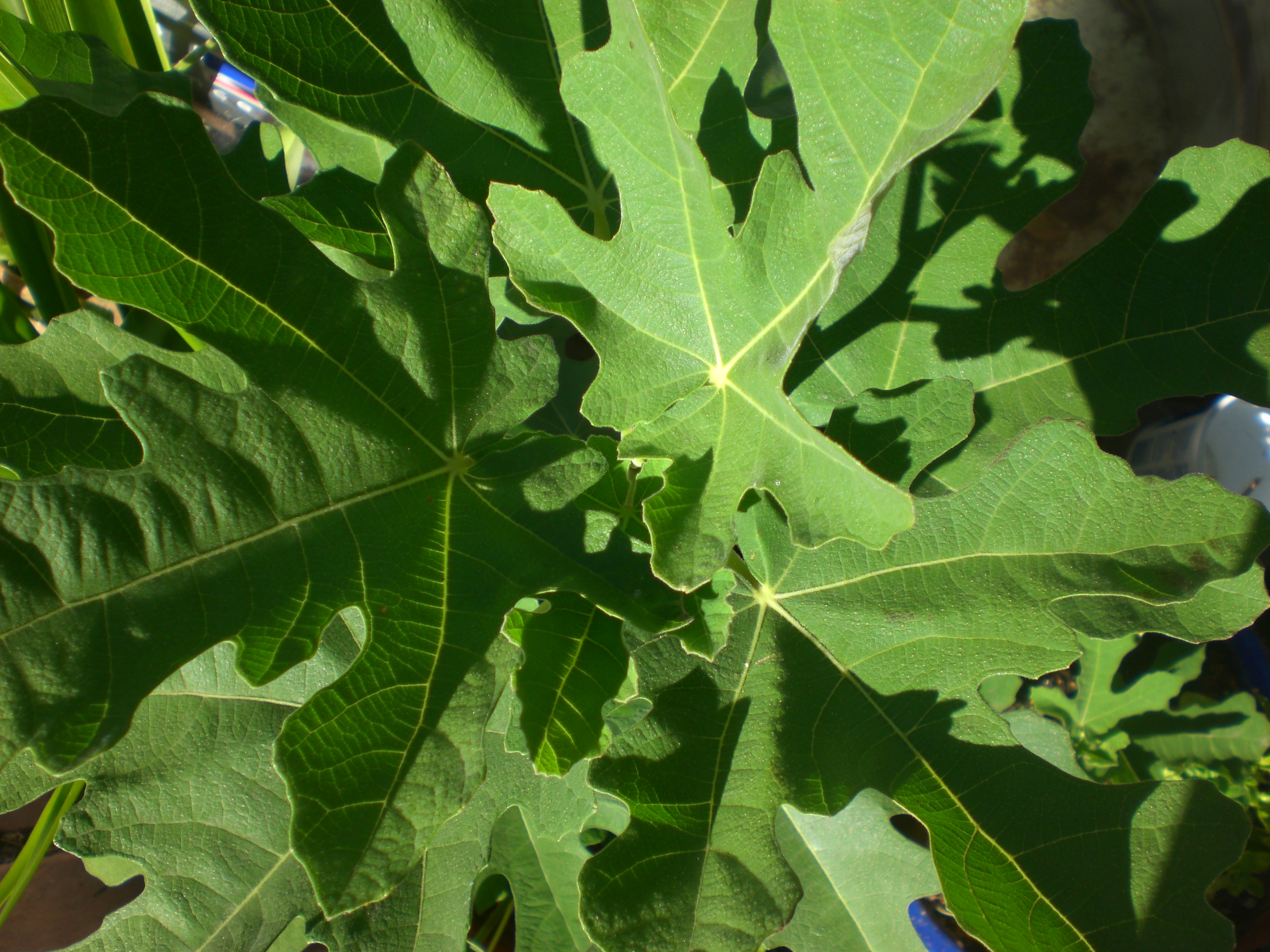
A little battered from the wind, but it should be okay.

I successfully dragged my little fig tree up the stairs from the basement, and put it into a bigger pot with a self watering liner in the base.I got the liner from Gardener’s supply http://www.gardeners.com/Self-Watering-Conversion-Kit%2C-1-Quart/36-725,default,pd.html?SC=XNET8035&utm_campaign=cse&mr:referralID=c03a828f-6d41-11e0-a86a-001b2166c2c0

It has snowed a couple of times, but the plant is under the porch roof, so it has done fine. The spring winds have torn up some of the bigger leaves, but there is new growth, so I think the move was successful. The next step will be to move it into full sun. And hope it doesn’t snow again. Welcome to Colorado.

Citrus in containers


 When the girl was just a twinkle in her dad’s eye, I bought 3 citrus trees from a catalog- tangerine, lemon and lime, all for around 10 bucks. When they arrived, they were tiny- the largest was the lemon, and it was about the size of a pencil, the others were stems with roots. I put them in 8 inch pots, and put them on our west facing porch for the summer. When it got cold in the fall I brought them in, put them in a south window, took care of them through the winter, waited for them to bloom.
And waited…
The girl was a kindergartner when the tangerine tree bloomed, and produced tiny sour fruits… it blooms every other year, or so, and the lemon more regularly. The lime only has bloomed once.
The best winter for them was a year when I took them to school with me- my classroom at the time had a wall of north facing windows, and the heat was turned off at night. Perfect conditions. Indirect sun and cool nights are what everyone recommends for citrus in pots, and that room was perfect for it.

One of my favorite memories of the tangerine is from that year I brought it to school- I had a student who was hungry all the time- all teenage boys are, to a degree, but this guy- hungry all the time. The tangerines were hanging from the branches, still green, still wickedly sour. I was on hall duty, the bell rang and I came inside. The air was fragrant- I could tell someone had picked and eaten a tangerine- “Who?” all the boys tried to look innocent, especially Miguel, whose lips were in a permanent pucker.

Unfortunately, I only had that classroom for a year, and now the trees have to suffer through winter at my house.We have a low-slung ranch house, and there are no north windows, the west ones are shaded. The citrus live in the boy’s room, which therefore has a jungle aura to it. He doesn’t mind, at this point…

I underplanted the lemon with a jade plant- neither seems to suffer, although I can’t say either is benefitting. I have wondered if I should try to separate them, but I think I’d wind up killing both. It’s in a 14 inch pot, near a west window that is shaded. I move it outside in May, and watch the low temperature predictions.
The tangerine is the giant of the bunch, and it bloomed tremendously this winter. Because it bloomed inside, there weren’t any pollinators around, so I had to play bee. I took a paint brush out of the boy’s watercolor set and went around transferring pollen from one blossom to another. There are tiny green marbles on the plant now- although not as many fruits as there were flowers…not an exact science.
The lime is still the tiniest of the three, I may move it to a different pot, with new soil, this spring to see if that will jump start it.

So, at 11 years old,, are these plants thriving? Not really. If I lived in a place where citrus could grow in the ground, and these were ten year old trees, I think I would have more fruit than I could give away. In containers, they are much more like pet houseplants than anything that contributes to my food pantry. The Logee’ s book I reviewed the other day has some helpful tips, that I mostly already learned the hard way, in keeping them alive for 11 years.

 Someday, when I get my conservatory (dreams can come true) maybe they’ll produce more, but right now, I’m kind of disappointed.

 But, hope springs eternal, I’ve ordered a Meyer lemon, also cheap and tiny, and I’ll nurse it to adulthood as well, fighting for window space in my kids’ rooms. It arrived the other day, and I’ll now count down the years until I can make lemon curd. We’ll have a party, with vanilla ice cream, too.

Ack! Undormant Fig Tree!


I peeked under the laundry bag which had protected my Chicago Hardy fig from any light in the basement this winter, and was shocked to see that it had leaves, it had buds, it had broken dormancy. Crud. (no pictures, I seem to have misplaced my camera, again) It is warm out, but too cold at night to expose tender new growth. I had also been planning to transplant it into a bigger pot with a self watering resevoir in the bottom, but I don’t think I’ll be able to manhandle it out of the current pot, root prune it, then stick it in the new pot without killing the thing. Or myself.

But it is such a cool plant! Big biblical leaves, dark and shiny in the summer, and last year, it actually produced 2 real live figs- they tasted just like Newtons, except without the cookie part. I think in a bigger pot, with more reliable water, it can produce even more. Here in zone 5, it is not likely to be hardy in the ground, so I am struggling with the pot, and the dormancy. 

I know, some people buy figs at the grocery store. Or they just don’t eat them. Or, they don’t complain about their trees.  From what I have read, though, figs have a long history of people messing with them- I’ve read about Italian immigrants in the Northeast wrapping their fig trees in tarpaper and straw. So, my plan is, wait two weeks, bring it upstairs and put it on the covered porch- it will get more sun, a little cold, but not enough to freeze the new growth, we hope. Next step, ask for help in the transplant process, so I’m not dragging it around myself.

The Logee’s Catalogue


I am on so many plant mailing lists- they know a sucker discriminating plant buyer when they see one. www.logees.com Got a new one the other day, and on one hand, it drives me crazy, and on the other hand, I feel very want-y about,  like, 6 different items. Logee’s specializes in tropical and subtropical plants for containers and greenhouses. I crave almost everything in this thing.

What drives me crazy is the organization. Flipping through it, there are figs and citrus on this page, then blueberries and passionflower, then…more figs and citrus…then papaya and sugar cane, then…another page with figs. Then more citrus. OOh, vanilla! But I have researched this already, and to grow vanilla you need a 2 story greenhouse. (SOMEDAY!)

What tempts me is the Meyer lemon plant, at only $11.50. In most other catalogues, Meyer lemons run about $50. I realize it will be tiny, and I will have to wait many years for the sweet little aromatic lemons to grow to maturity. At this point in my life, though, I honestly do have more time than money.

Also tempted by a tea plant- imagine, I could grow my own tea!!! And a coffee plant- I could grow my own coffee!!! And papyrus- I could grow my own…Egyptian paper!!!

Deep breaths. Deep breaths.

I (accidently) grew a sweet potato!


Way back last summer, there was a sweet potato sprouting in the bin, so I chucked it into an empty flowerpot, with some soil, of course, and put it out on the patio. Sweet potatoes have pretty, heart shaped leaves, and I enjoyed the greenery all summer, honestly not expecting it to have enough soil or water, or warmth, to produce tubers. I didn’t even check at the end of the summer.
Today it’s warm and sunny, so I went out to do some fall clean-up which I should have done when it was actually fall, and emptied out the pot with the sweet potato plant. Imagine my surprise to see an actual sweet potato. there were a couple of small mushy ones, but one was the size of one you’d see at a grocery store. I’m going to eat it on Christmas.

The leaves froze sometime in October, but the tuber stayed alive in a 10 inch flowerpot.

Forcing tulips to do what?


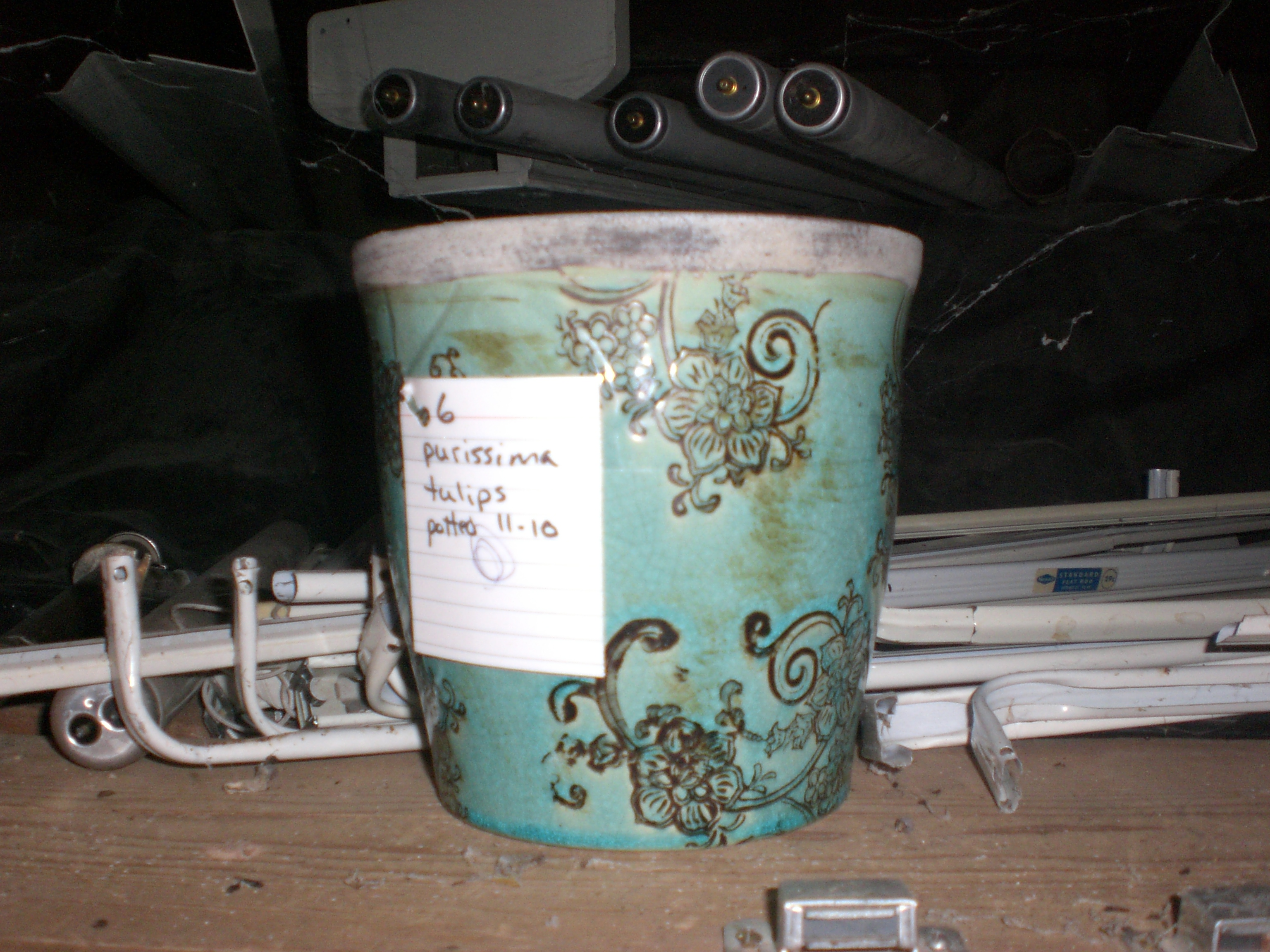
Forcing tulips to bloom, of course, but earlier than they would ordinarily. I’m trying this as an experiment this year- I bought 48 white “Purissima” tulips this year and purposely kept out a six pack to force (okay, okay, I was just sick of digging holes, after also planting 96 species tulips and about a million siberian squill). 

I put them in a six inch pot, kind of cramming them in, and then started thinking. The bulbs need to be cold for at least 8 weeks, but not frozen. Our garage gets too cold, the fridge is perfect, but it really isn’t ideal  for me to have flowerpots in the fridge. Probably somebody else could get away with it… not me.

The previous owners decided to store old curtain rods in here for some reason, but I am going with tulips...

Then I had a brainstorm: in our basement, there is a little door to an undercrawl- the main part of the basement is finished and heated and civilized, but the undercrawl is open to Mother Earth herself. I was considering where to put my pot of tulips, when I thought of that little door. So, the pot is there, to wait out the rest of fall, and a chunk of winter, and then in the dark days of January, after the tree is down, the dangly sparkly things put away, the twinkly lights rolled up and boxed, I will have a little pot of spring waiting for me in the basement.

Growing Lemons in Zone 5 and Other Crazy Hobbies


It is nearly time to move my citrus trees in for the winter. I have a lemon, lime and orange in pots which spend the summer outside, then move inside when it is cold. The dream is one day to get a supply of homegrown citrus. 

There's new growth on the lemon tree, and we hope it blooms this winter.

The reality is disappointing. One year we had quite a few oranges, and tremendous blossoms in January, but that was when the plants came to school with me- I had a classroom with north windows, and it wasn’t heated at night, and I think that was the perfect climate for them.  I changed schools, and my current classroom doesn’t have windows ( I wonder what they were thinking, those school building designers of the late 60’s- “I know, those kids are getting distracted by looking out the windows, so lets make it so they can’t!”) so I have to cram them into the boy’s room, which has the best south and west windows, and hope for the best. They are all three in 14 in diameter pots, and some years they bloom and produce a few fruits, but I am a looong way from self-sufficiency in citrus.

Last year I added another edible plant which won’t survive the winter here, a Chicago Hardy Fig.(www.raintreenursery.com)    It arrived at the end of the summer, a twig smaller than a pencil with two leaves and a hefty bundle of roots.  The half  page of instructions said:  pot immediately, not let it get colder than 20, and when it went dormant bring it inside to a cool, dark place, keep it moist, but not wet, then bring it into the daylight when there was no longer risk of freezing temps. It was complicated, and made me a little nervous, but the plant made it through the winter, and is currently alive. 

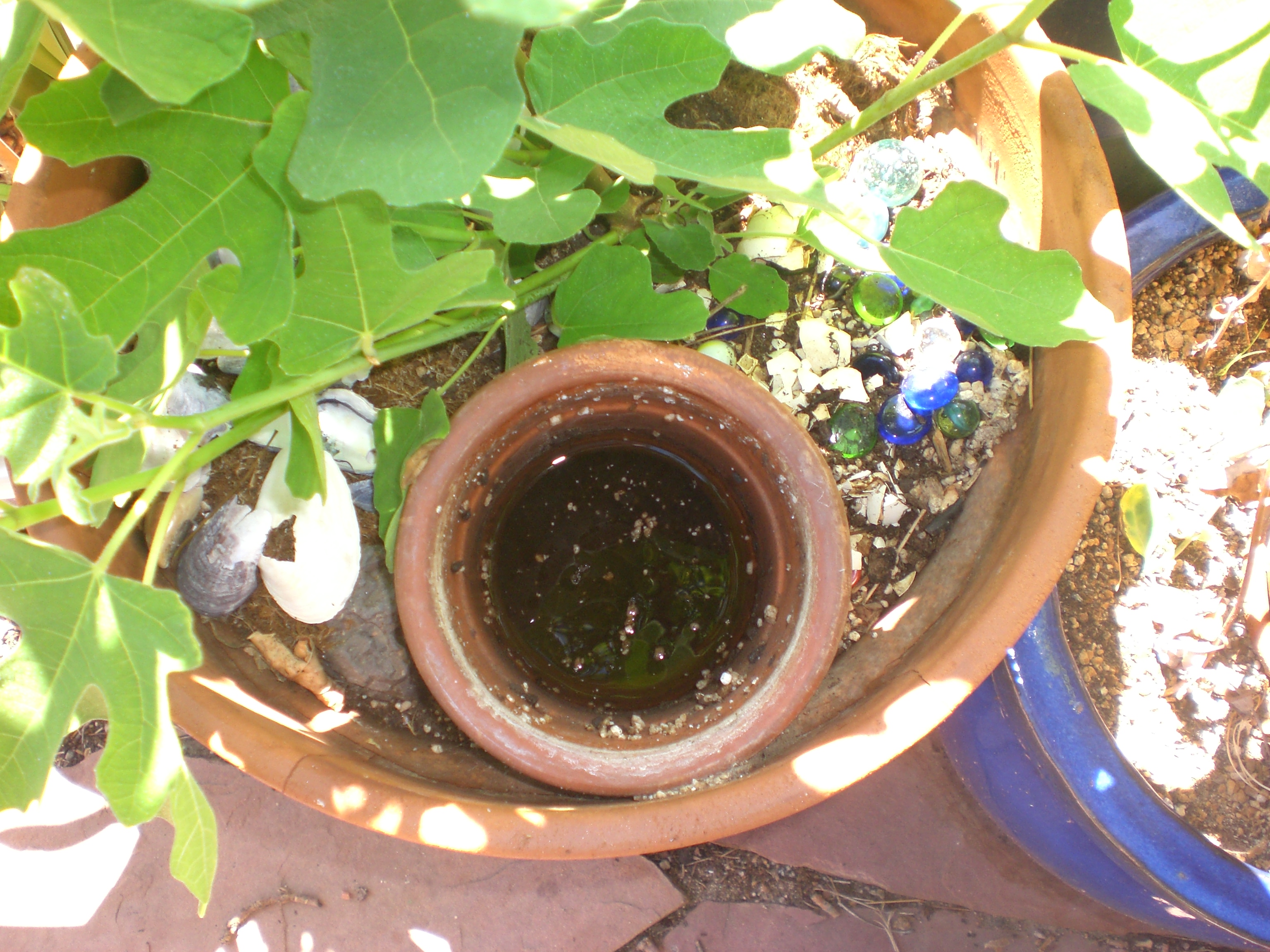
A porous clay vase turns any pot into a self watering container- it holds about 1/2 gallon, and seeps into the soil slowly.

I set up a large clay pot with a porous clay vase inside- the vase holds about ½ gallon of water and slowly seeps through to the soil. While it is outside I fill it every few days.  I kept it in our guest room in the basement last winter, with the twig under a flowerpot to keep it genuinely dark, and periodically filled the vase with water.  In April, I peeked at it, and saw that there were white buds popping, so I moved it to the back porch, ready to bring it inside when frost threatened.

It has grown beautifully all summer. I didn’t expect fruit for a few years, but there are 2 tiny figs on it. It is probably 18 inches tall, and sometime in October I’ll bring it down to the basement again, to start the process again.

Pomegranates might be next on my list of impossible fruits for Colorado- what else?

Next Newer Entries