Thanks to C.L. Fornari’s meme last month, by pure luck I had a ton of new visitors to my dusty little corner of the blogoverse. If you’ve come back, thank you, and welcome. I say it was by pure luck because the links are listed on J.L.’s site in alphabetical order by plant name, and my plant was chives. Now for this month…aconite, anyone? Asparagus? AAronroot? I just made up that last one, there’s no such thing as aaronroot. As far as I know.
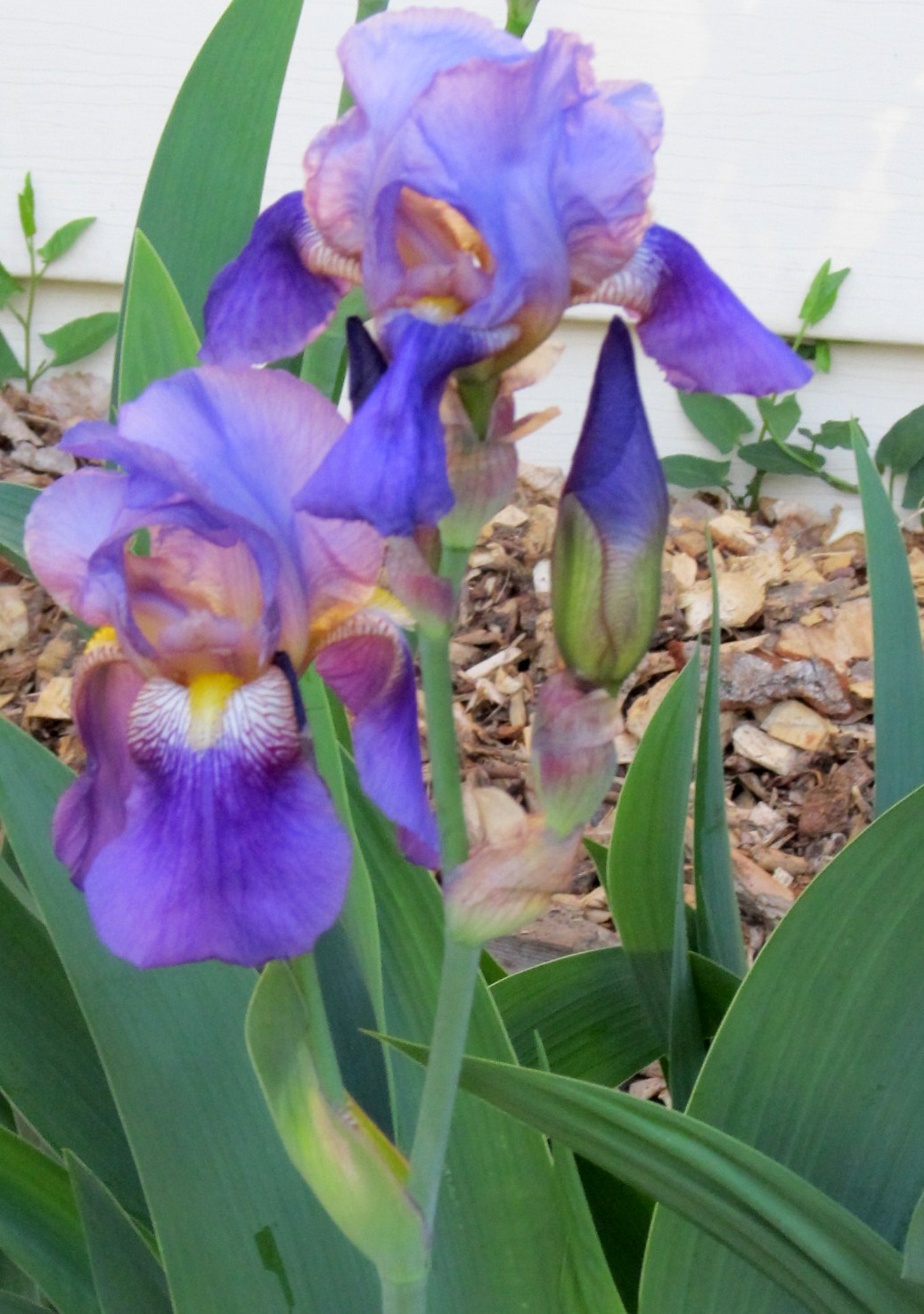
I decided to go back to the true spirit of the meme, which is that newbie gardeners sometimes get scared off by complicated instructions, or recommendations from one side to be all organic, and the other side to use blue chemicals on a regular basis. What people need is a slam dunk- something so easy you have to give away extras. In my garden, bearded irises are a slam dunk. And toward the end of June, I will probably be giving away extras, if anyone local is interested.
I use Iris a lot as a kind of placeholder- when my Korean lilac was 6 inches tall, surrounding it with iris made it look like a real garden bed, instead of a twig surrounded by mulch. Now that the lilac is about 4 feet tall, and covered with flowers, the iris anchor it, and are ready to be divided and given away.
Making friends with a gardener who is dividing iris is maybe the best way to get them, unless he’s a stalker, which you won’t know until he keeps showing up at your door with bags of rhizomes…
Once you get your bag with plants, sort them out. The best roots are big and fat. There should be at least one fan of leaves per chunk. I trim the leaves to about 6 or 8 inches from the rhizome, and plant it with the dangly roots in the soil, but the knobby rhizome just on the surface. If it goes underground, it rots. In fact, iris is nice and drought tolerant, not really caring whether it gets much water. Cutting the leaves back allow it to establish itself without drying out, but there are still green leaves to feed it while it makes itself at home.
My wonderful MIL is the source of this information, and the source of all my iris as well. She has told me to transplant before July 4th. I don’t know if that is specific to zone 5, or the front range of Colorado, your mileage may vary in other parts of the world.
What if you can’t bring yourself to make friends with a gardener? They sell bearded iris- McClure and Zimmerman has some in their Spring catalog for $11.95 if you buy 3. That seems expensive…but as I’ve said, I’ve never bought Iris. They also claim that a coral-pink variety named “Beverly Sills” is among the most popular. Hmmmm…I don’t know.
Buying them would be the way to get unusual colors- most of mine are light purple, with a couple of plants that are dark purple, and one that is bronze-flowered, which blooms a week or so after the others.
Trust me, you can grow that.
Bearded Iris- you can grow that
05 May 2012 5 Comments
in favorite things, gardening, you can grow that Tags: bearded iris, being green, drought tolerant, gardening, insane frugality, iris, other people's gardens, you can grow this, zone five
Short on rupees? Aren’t we all.
30 Apr 2012 Leave a comment
in containers, food, gardening, gardening in containers, Uncategorized Tags: being green, compost, containers, food, gardening, insane frugality
I used to spend a lot of time on a message board at You Grow Girl.com and there was a thread once about the advisability of re-using potting soil, and using fillers in the bottoms of pots to take up space, rather than filling an entire pot with soil. There was a lot of advice back and forth about using Styrofoam peanuts, or aluminum cans, in order to avoid buying that extra bag of potting soil. There was another poster, who was on the boards frequently, a guy from India, and he responded to this thread uncomprehendingly, “Why are you so worried, a bag of soil only costs a few rupees, just buy another bag of soil!”
Well, maybe you don’t have very many rupees to start with, or maybe you just spent a bunch of rupees on a really pretty flower pot, or ski tickets, or new shoes…
I do wind up buying new bags of soil every year, of course, because I have a lot of containers. I also re-use soil. I typically dump my annual pots out into a big bin, as well as the pots of things that were supposed to be perennial but didn’t get that information and died anyway. I dump the pots out, break up clumps and stir in more compost.
The other strategy I have been using is to fill space in the bottom of big pots with stuff other than soil. Like I said before, I have seen recommendations for using styrofoam peanuts or pop cans. The one time I tried styrofoam, it was really gross when I tried to dump it and reuse the soil- muddy foam chunks. It was such a mess, I never want to try it again.
Last year, I read on the interwebs) about a development group in urban Mexico which was helping people grow their own food in 5 gallon buckets. They got free buckets from stores, but their soil was in short supply, and they were low on rupees (er, I mean pesos) too. They did have access to weeds, sticks and branches. They experimented with chopping up twigs and weeds and filling the buckets most of the way, then filling to the top with good soil. Then they would plant tomatoes and other plants. By the end of the growing season, the sticks and leaves would have decomposed, and they would have rich new soil for the next time.
So, I read this last year, thought about my shortage of pesos, rupees, er, dollars… and thought to myself, I have weeds, sticks and branches… I tried it with two pots, I used twigs no bigger than a pencil to fill most of the pot, then a big wad of dandelions. Since I knew it would break down, I filled it to within a couple of inches of the top, then put in the decent soil and plants.
One pot held an artichoke, and it didn’t do well at all. I suspect it was because when we left town it got too dry. I was counting on all the organic matter in the bottom to be a reservoir for moisture, but the roots just hadn’t gotten that far down yet when we went on vacation.
The other pot had a pomegranate tree, and it is doing fine a year later. I brought it inside last fall, it went dormant for a couple of months, then woke up again and started putting out leaves with the sun that came through the basement window. The soil level did sink down- it started an inch below the rim, now it is probably 4 inches below the rim. I had planned on re-potting the pomegranate anyway, the sinking soil just accelerated the process.
In the future, I don’t think I’ll use this method for perennials, it is kind of a pain to re-pot anyway, so doing it twice as often doesn’t seem to be worth it. I have done it again this year, with a pot of lilies mixed with sugar snap peas- I want the peas on the patio for snacking on, and the lilies are for color. I could say I want the lilies to act as living trellises for the peas, but that would imply I had planned ahead. I have a couple other big pots that need filling, for geraniums and stuff, and we certainly have enough weeds and sticks.
Diagonal Apple Tree
27 Apr 2012 5 Comments
in gardening Tags: apple tree, global weirding, organic, permaculture
I’ve written before about my travails with my Golden Delicious apple tree( it’s my favorite-). After 5 years of struggling in my orchard without quite enough water, the poor guy went horizontal last October in an early season snowstorm. I pulled it back as close as I could to vertical, which is about 75 degrees, (I don’t know, I don’t have a protractor!) and tied it to 2 stakes. My most recent worry was a late season snowstorm, when rain turned to snow on April 2. I wasn’t so much worried that the buds would freeze, I was worried that branches would break off, or that it would go horizontal again and just keel over completely.
It didn’t. So, that’s good news, I guess, if not exactly worthy of a whole blog post…My worries were groundless. The blossoms look fine, and it is getting warm enough for pollinators, so we should have some apples- Golden Delicious, my favorite.
I am keeping the stakes in place, the tree is still leaning to the north, and the 2 stakes pull is pretty steadily to the south. I may add another stake to take some of the pressure off. This June, I again plan to put paper bags on the fruit to get organic apples– I’m bringing my good stapler home from work.
Shows how much you know, it’s only mostly dead!
19 Apr 2012 Leave a comment
in gardening Tags: cherry tree, fruit trees, organic gardening, permaculture, pruning
A Northstar sour cherry tree was one of the first things I planted when we moved to this house, 11 years ago. It is what enabled me to call the mini fenced off garden area “the orchard” which I think still makes people wonder about me- um, rampant raspberries, a horizontal apple tree, some wayward herbs and a dead cherry tree? That’s an orchard?
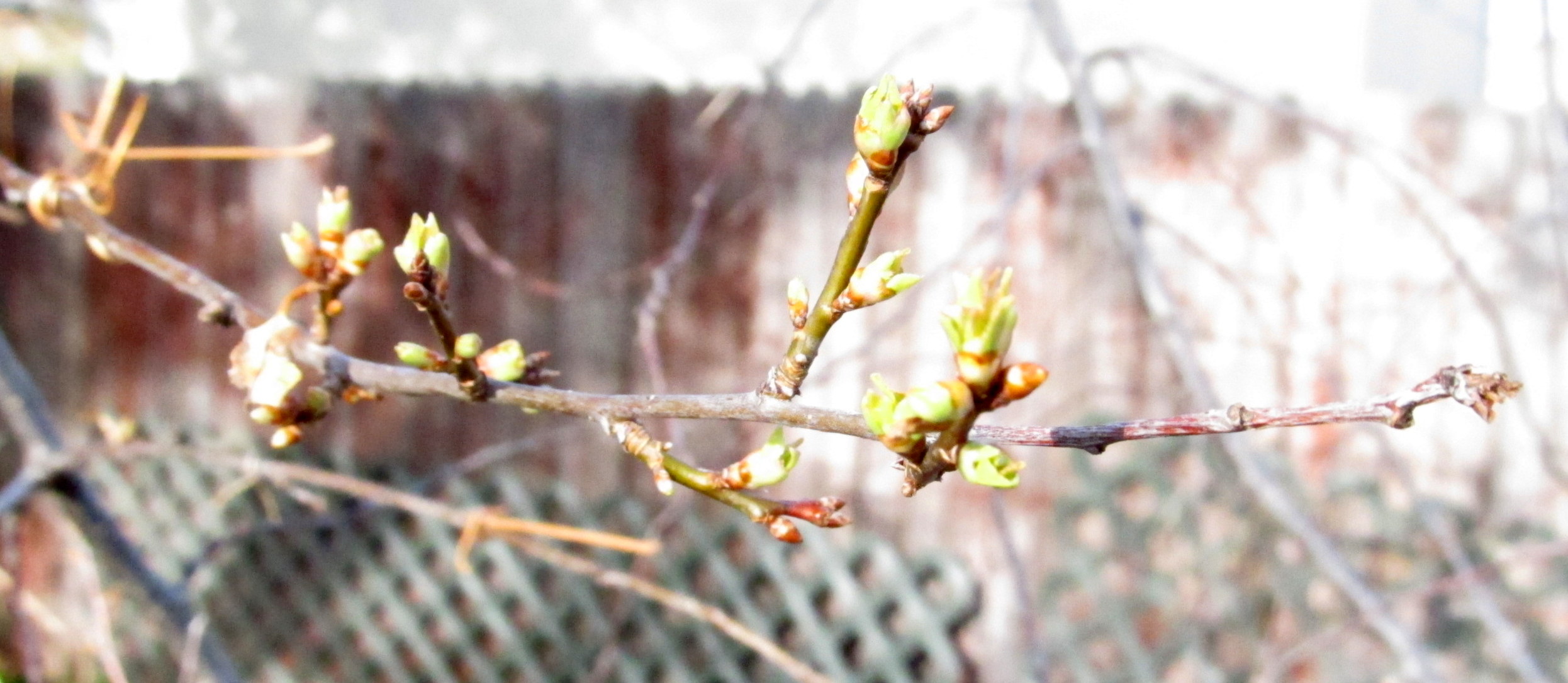
Ha! The cherrry tree isn’t dead, I found out today- it actually has one major branch that is still alive, with buds breaking out and everything. The sprinkler is on it now, and it will get a scoop of compost, and as soon as everything that is going to leaf out does, I will go in with a pruning saw and take out dead wood. The major branch that is still alive will make a new leader, and we’ll see how well it does.
My hope is that the root system is still healthy enough that the one living limb can become the new leader. I am guessing that lack of moisture is the problem with this tree. The herbs and strawberries that are the understory of the orchard thrive without supplemental irrigation. What the lemon balm, chives and spring bulbs need, in terms of water, is much less than what the cherry needs. I need to solve that problem this summer. I have been building the soil with mulch and compost, and I’ll continue to do that. This could be a case of the tree solving its own problem- not enough water for a mid sized tree? Okay, kill off some branches, here’s enough water for a tiny tree.
I will ahve to decide, at some point, when to cut my losses, take out the tree and replace it- what do you think? One more year?
Bloom Day- Apple Blossoms
16 Apr 2012 Leave a comment
in environmentalism, gardening, Uncategorized Tags: apple, bloom day, dandelions, golden currant, late storms, lilac, mock orange, tulips
I have an elderly apple tree which continually grows into the power lines and every year city crews come by to whack it back. The apples are sour, and numerous (overly numerous most years). This is the best year for blossoms I can remember- the tree is a shower and curtain of blooms. And, they are predicting a snow tonight, and a low of 28 degrees. Sigh. I guess we won’t have to worry about numerous apples this year.

"Ooh-leee-oool" I think that's how you say it, anyway. The French don't spell things like they say them.
Also in bloom- species tulips, white,purple and yellow hybrid tulips ones whose variety I can’t remember. There is one blooming “oullioules” tulip, out of 50 I planted several years ago. It is my absolute favorite pink tulip- it is kind of on the orchid-colored range of pink, with white stripes. It makes me realize I should buy a bunch more. I also have siberian squill and grape hyacinth, which are both naturalizing nicely.
Golden currant, lilac and mock orange shrubs are blossoming as well, and a goumi shrub. Goumi is related to russian olive and is a nitrogen fixer. It is supposed to have delicious fruit, but this one has never produced any, to my knowledge. It is windy enough that the flowers on shrubs are coming out ridiculously blurry. It is the storm coming in.
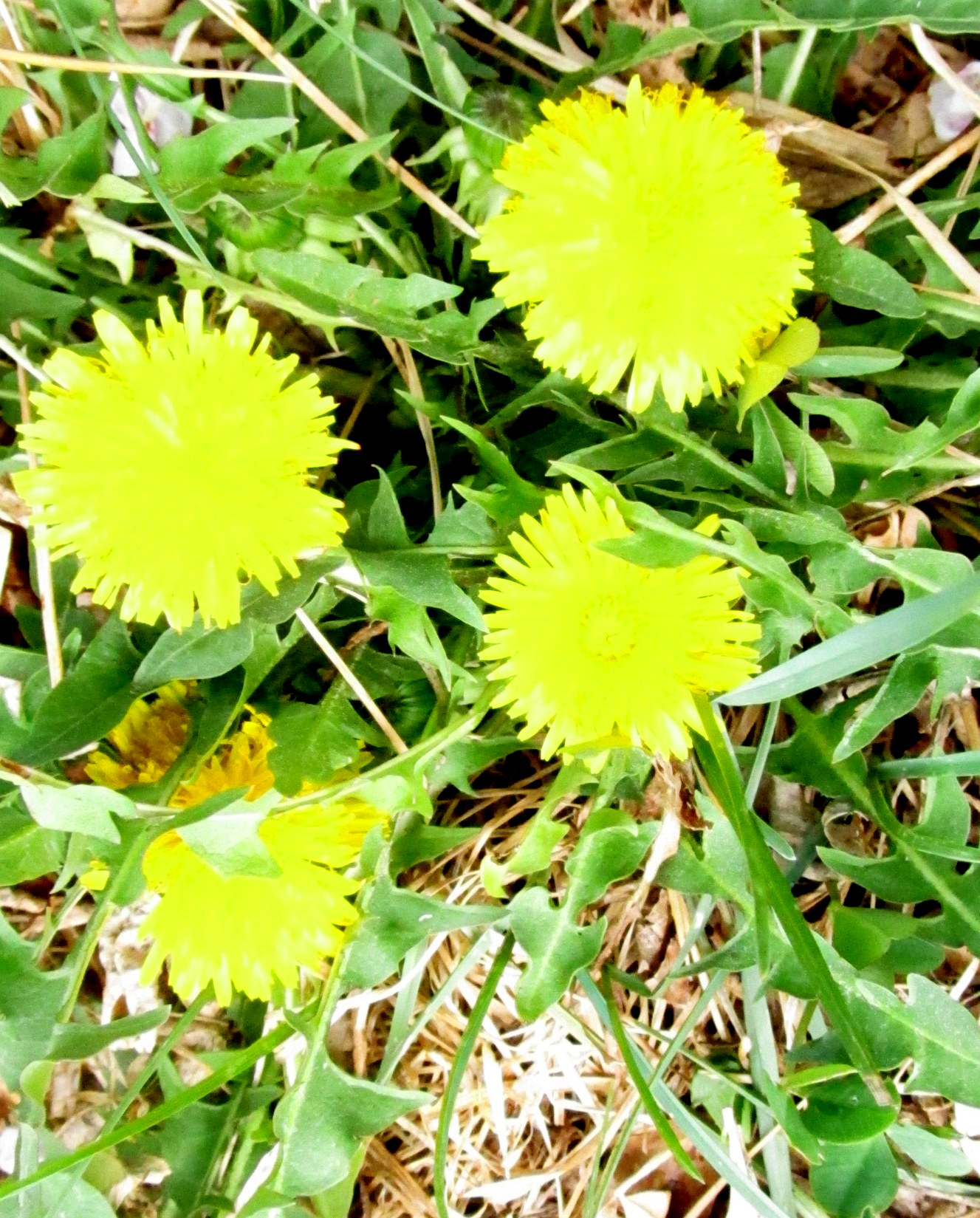
And, of course, the dandelions are in full bloom. hooray! I know, I should have picked them before they bloomed and eaten them…
Chives- you can grow that!
05 Apr 2012 11 Comments
in containers, food, gardening, gardening in containers, herbs, lawn Tags: chives, containers, herbs, you can grow this
Do you have a tiny amount of space, and want some herbs? Or, do you have a lot of space to fill and are looking for something cheap that will spread? One of the most reliable edibles that come up this time of year is chives.
They belong to the onion family, but the greens taste much milder than green onions- not as sharp. To start from seed, dump a whole packet on the soil of a small pot, water regularly. Very fine grass like leaves will start to come up, with a sharp bend in the end, and the seed coat still attached to the shoot. Leave it alone, it will fall off on it’s own. If you are starting the seeds inside, harden them off by leaving them outside for an hour or two per day- if you transplant them straight to the outside they’ll burn and die. Moment of silence…
Okay- if you buy a pot at a nursery, they will most likely be hardened off already, and you can plop them into the ground or into a container. They have such a shallow root system they can go into a container with other things.
Snip off individual shoots and flowers- the flowers are edible, and have a funky texture- funky in a good way. Eat them with potatoes, obviously, or deviled eggs. That reminds me, we need to get eggs and mess up the kitchen…there is still dye on the tablecloth from last year.
If you wind up not eating the flowers, let them go to seed, that way your patch will spread. As I said, chives don’t need very deep soil- in fact, when I build my dream shed, I plan to plant chives on the green roof. We just have to tear down that playhouse, mwah ha ha ha!!!
I have also considered the possibility of a chive lawn- it looks so grassy, and doesn’t take much water…and just think of the fragrance when you mow…yeah, maybe not.
Edited to add- I keep forgetting to mention that “You can grow that” is a meme created by C.L. Fornari, genius garden writer. If you came here via her site, welcome. To find more blogs with growing tips, go to C.L.’s site! http://wholelifegardening.com
A Year’s Worth of Garlic, part deux
29 Mar 2012 7 Comments
in environmentalism, gardening Tags: drought, garden, garlic, hardneck, herbs, organic, softneck
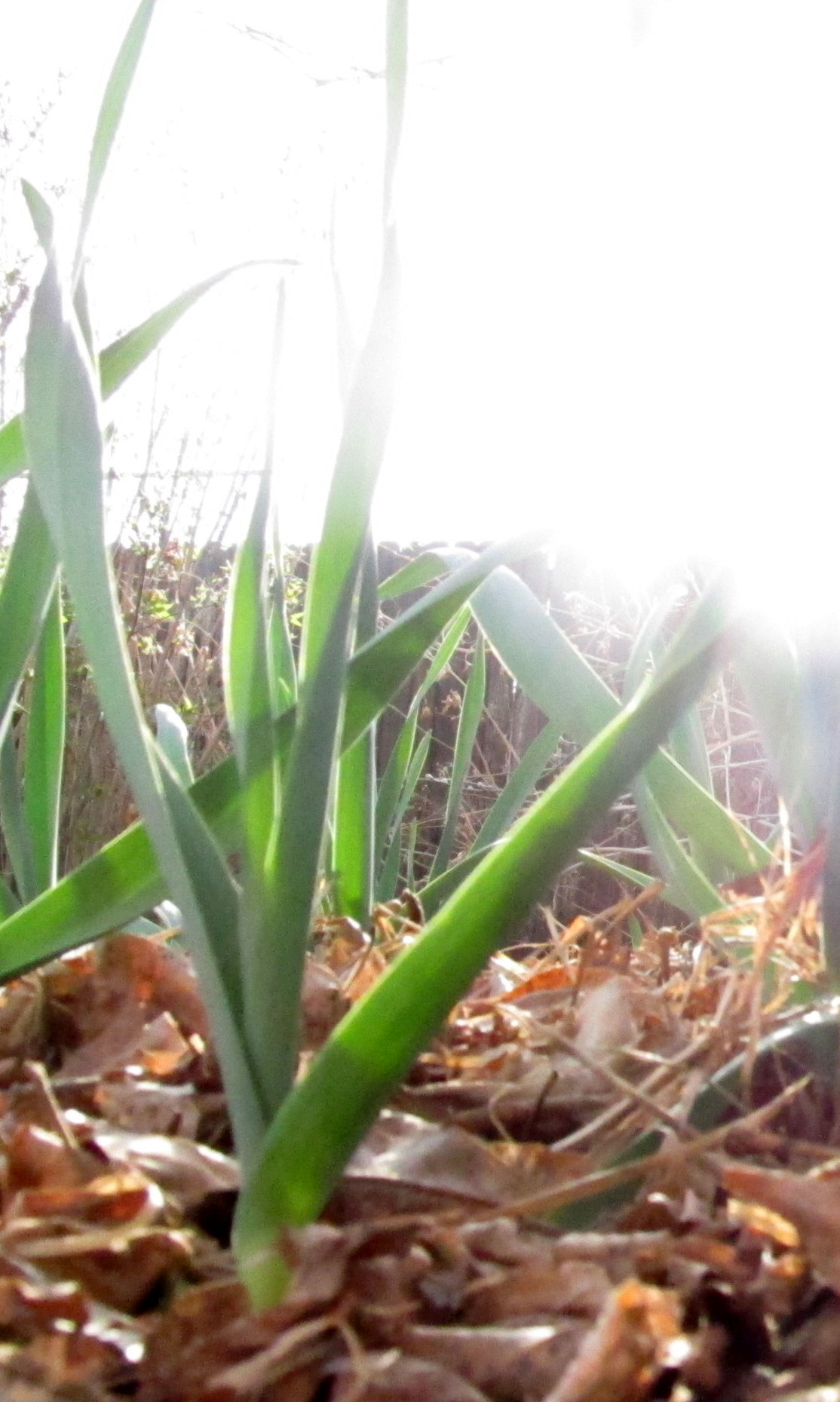
Last summer, I harvested some lovely garlic from my garden, and we have been eating it pretty much all winter. We have not had to buy it at all, and we still have several heads- it may not get us all the way to July, but it will be darn close.
We also planted more- I saved out the best cloves to plant, and also bought some hardneck garlic to try. I would link to that post, but can’t figure out how...can someone please teach me how to use link within in WordPress? ooh, somebody did- thank you!
Hardneck garlic has a bonus- it sends up a flowering stem called a scape, and they can be thrown into soup, or sliced for stir fries. Or smoothies…nah, maybe not smoothies. The scapes will fill a gap with garlic flavor after all the heads of garlic from last year will have sprouted and gotten mushy.
I planted it last fall when the soil was still warm, and lo and behold, it has come up. It has been pretty much the only part of the garden I have watered this spring. It has been super dry, and I probably should be watering my young trees right now…
You can grow this- microgreens
04 Mar 2012 12 Comments
in containers, food, gardening, gardening in containers Tags: containers, food, gardening, winter gardening, you can grow this
Yuppie chow. Rabbit Food. Microgreens. All the same thing- bags of tiny salad mix work out to 20 bucks a pound, but really, you can grow this, right now, on your kitchen counter.
I got a packet of seeds at the store- Botanical Interests is a local company. Their “mild mix” has beet, red cabbage, kohlrabi, pak choi and swiss chard in it. The sprouts are supposed to emerge in 5-10 days, and the leaves are ready to pick in around 25 days, once they get 1-2 inches tall.
You can cut them, toss into a salad or onto a sandwich, and the plants keep growing there in the pot. A few days later, there is enough for another salad- theoretically.
I put them into a 6″pot on the kitchen counter- they don’t need much light until they sprout, and once they sprout, I’ll move them to where they’ll get more light. There is enough in the package for a whole flat, but I don’t want to give up that much space for it. It suits me better to get a pot going now, then start another in a few weeks, that way as the first pot is petering out, the new one is coming into production. As the weather gets warmer, I can grow this same mix outside as well. So can you- you can grow this.
CSI- Meyer Lemon
10 Feb 2012 Leave a comment
in containers, gardening, gardening in containers Tags: containers, eating the harvest, food, insane frugality, zone five
A corollary to the idea that I should be knitting (and skiing) at the top ten percent of my ability, is that if I am not killing plants, I am not challenging myself as a gardener. Well, I killed my Meyer lemon tree, so I guess that counts.
It isn’t terribly mysterious why, though. Not enough water.
Interesting fact, more houseplants are killed by overwatering than underwatering.
Not in my house, you say, well maybe. Usually, overzealous plant owners water too much, which waterlogs the roots. Roots need oxygen, and when they can’t get it, the plant dies.
Not in this case, however. The Boy’s room has windows facing south and west, and he is generous enough to let me keep my plants in there- in the winter he lives in the jungle room, essentially. I usually go in there every few weeks with a jug of water and splash everything. Most of the plants are in fairly large ceramic pots, but the Meyer lemon is…was in an 8 inch diameter clay pot. The splash of water every couple of weeks was not enough to keep the soil moist.
When I discovered the wilty leaves, I overcompensated by thoroughly soaking it in the kitchen sink. It died anyway.
Cue the sad music.
I’ll get another Meyer lemon- try to keep it going. I can’t decide whether I should buy a larger size than what I started with (I paid roughly $10 for a tiny plant in a 2.5 inch pot) so I can just pretend I didn’t lose a year’s growth…what do you think?
You do have a compost pile, right?
05 Feb 2012 Leave a comment
in environmentalism, food, gardening, herbs Tags: being green, compost, gardening, herbs, soil preparation, zone five
I have a little raised veggie bed right outside my back door- it is only 2×3 feet, but super convenient. Last summer, I would go out, pull up a green onion or two for a salad and go right back in. Next year, I plan to put in tomatoes, which are a heavy feeder- they like a lot of moisture, and a lot of nutrients. I put tomatoes in a different place every year, so disease organisms don’t build up.
Solution- make this veggie bed the winter home of the compost bin, then spread it out in spring.
I’ve written before about our bin(link to own post)- a Darth Vader head- very ugly, but pretty effective for boiling down organic waste into compost. I move it every few months, spread out the finished compost where it is, and put whatever is not broken down back in the bin in its new location. The partially broken-down stuff is seeded with the compost organisms that will help break down new material.
Because I want the soil to be super rich, the first layer of stuff I put in the bin was comfrey leaves. Comfrey is an amazing plant- it has deep roots that take minerals out of the subsoil and concentrate them in the leaves. When the leaves break down, in compost or mulch, the minerals are deposited in the topsoil. The plants can be whacked back several times a summer and keep coming back on just natural rainfall.
I add kitchen stuff as it fills up the cup on the edge of the sink, and layers of leaves, too. Kitchen waste is usually high in nitrogen, and can be smelly if there isn’t high carbon material added at the same time. Compost breaks down all winter, although it is slower when the weather is colder.
In about March, I’ll lift the bin off and hopscotch it to another location. I’ll take off what hasn’t broken down, and spread out the finished compost- moving some to other beds that need it, but saving a lot for the bed. My tomatoes will have a deep bed of good soil to feed on.
You don’t need a Darth Vader head, or any kind of container- compost will break down anywhere. I like my bin, but I recognize it isn’t necessary.