Asparagus Bed- do it right once…


I got 25 asparagus plants in the mail a couple of weeks ago. Actually 50, because I split an order, but 25 were mine. I knew they were coming, but kind of put them out of my mind, because they are a lot of work. Planting asparagus is the kind of thing that if you do it right, you only have to do once… it’s a lot of pressure.

I put in 10 purple asparagus plants about 4 years ago, and did them in a raised bed. My thinking was that all the directions say to dig a trench, then as the plants grow, add soil to them. I thought, why not put them on the ground, then add soil as the plants grow? I had excavated for our flagstone patio, and had a lot of topsoil, so I thought it would work…I thought wrong.

It is dry here in Northern Colorado, and one of the benefits of the trench method is that the plants get more water. Out of the 10 that I planted, only about 3 are still alive, and I have never gotten a meal out of the planting. Last year, I was able to pick about 20 spears, but not on the same day, of course. I just ate them raw out in the garden.

So, this year, I am working harder on it.  Last Spring I put some horse bedding down in an area near the apple tree (I planted some perennials, but they didn’t work out (moment of silence for dead lady’s mantle)) so I had an area about 10 feet across with some pretty decent soil. It was also the area I had hop-scotched my compost bin around, so there would be some pretty nice compost there, too.

My poor little poin-and-shoot camera- it's like, "what did you want me to focus on here? the shovel? the dirt? what am I looking at here?"

 I figured instead of digging a long trench, I would do it in a horseshoe shape, and use the space in the middle as a vegetable bed this summer. This is where my tomatoes and peppers will go, so they can benefit from the water and compost, too.  In Permaculture books, they call this a keyhole bed, because you access it from stepping stones in the center- it minimizes the amount of path you need to get to plants.

The weekend the plants arrived, it had rained lightly, so the soil was actually digable- the end that hadn’t gotten as much horse bedding was clumpy and hard to get through, but the side that had been mulched was like slicing chocolate cake.  Well, maybe not like cake, but it was certainly easier.  We have clay soil, so the more organic matter, the better.  I dug down about the depth of my shovel blade, and put the loose dirt in the center of the horseshoe.

The following day, I placed the plants- about a foot apart in the trench. I then mixed the loose soil with a few bags of coffee grounds I had gotten at Starbucks, and covered up the plants. All of them already have shoots on them, and in the last week, I have scooped more of the soil from the center on top, slowly filling in the trench. God has been helping out with the rain- (Thank you, God) making up for a very dry winter with a nice wet spring. As they grow, I’ll continue to add more soil on top, and compost. I won’t eat any spears from this year, but by next year I should be able to harvest for a week or so, then more and more. I hope not to have to do this job again. Unless we move…
Squill


worm's eye view of the blooms

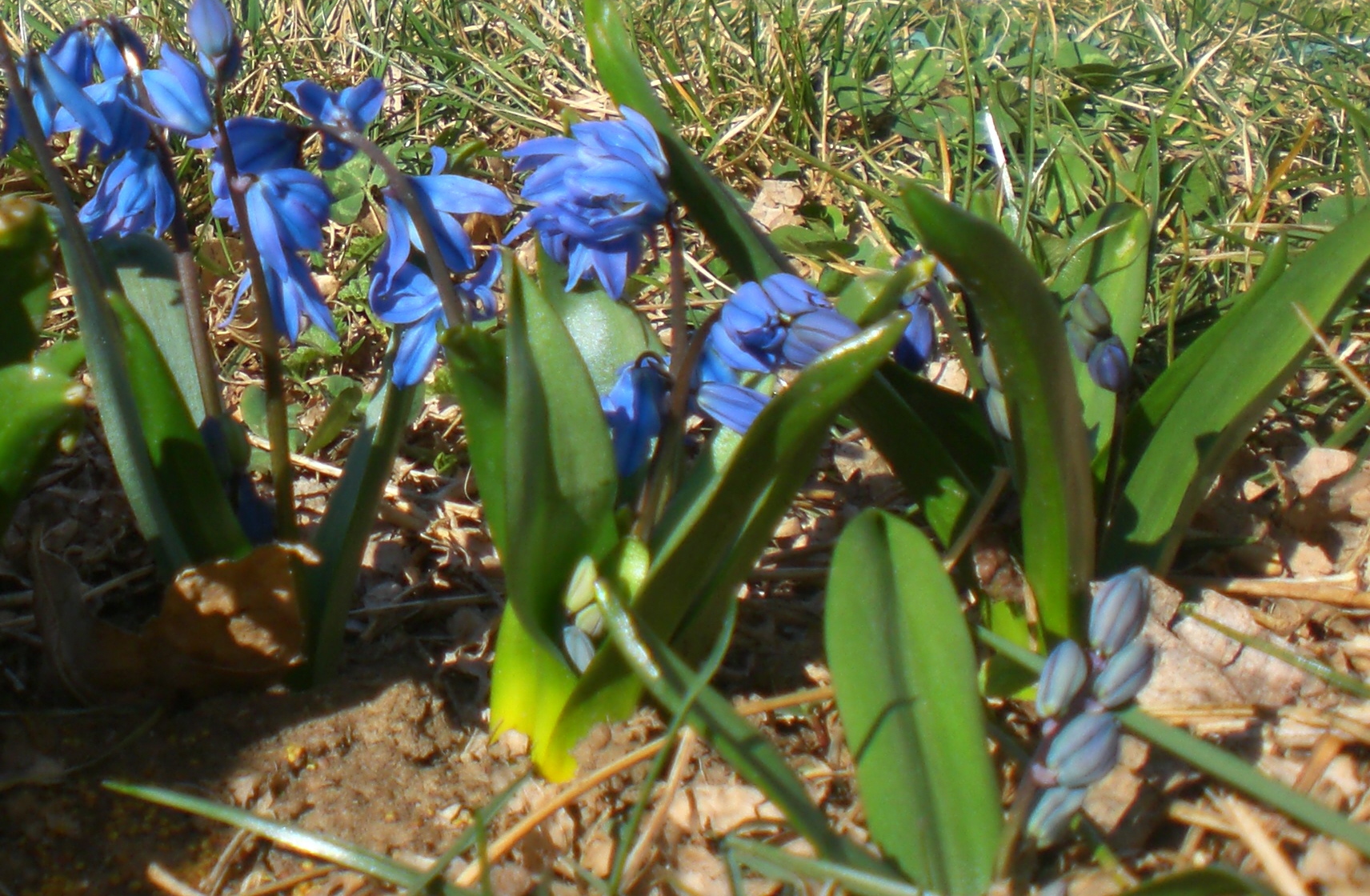
In my never ending quest to eliminate lawn (well, I guess it will end someday, when there is no more lawn…) I have planted Siberian Squill in the back yard, next to the hillbilly goldfish pond. I bought  48 bulbs from McClure and Zimmerman, and stabbed into the lawn with my trowel, opened up slits, and placed the bulbs in.

 I’d like to believe it was by design, but I love the way the flowers in the bed by the pond look as if they have just spilled over the sides, and there are little blue flowers mixed in with the grass. They are supposed to spread over the years, and this is the space where the grass is worst- no shade at all, and I don’t water or fertilize. I spread some of my precious compost on the area last year, and I dig out the perennial mallow, but I have to say, the lawn is never my top priority.
Squill has pretty blue flowers, and there are variations- like blue with white stripes and white with blue stripes. Sigh. I just got my new McClure and Zimmerman catalogue, which means they’ve already got me thinking about a new order. I hope to let squill self-seed, and naturalize on its own. To get it to spread, I need to  let the foliage go yellow, which means don’t let the kid from up the street mow for a couple of weeks.

 The kid from up the street said to me today, “can you just give me the money?”

ahahahahah… No.

Bloom Day-Tulips


Looking over the edge of the pond- this is a new bed I just planted last year.

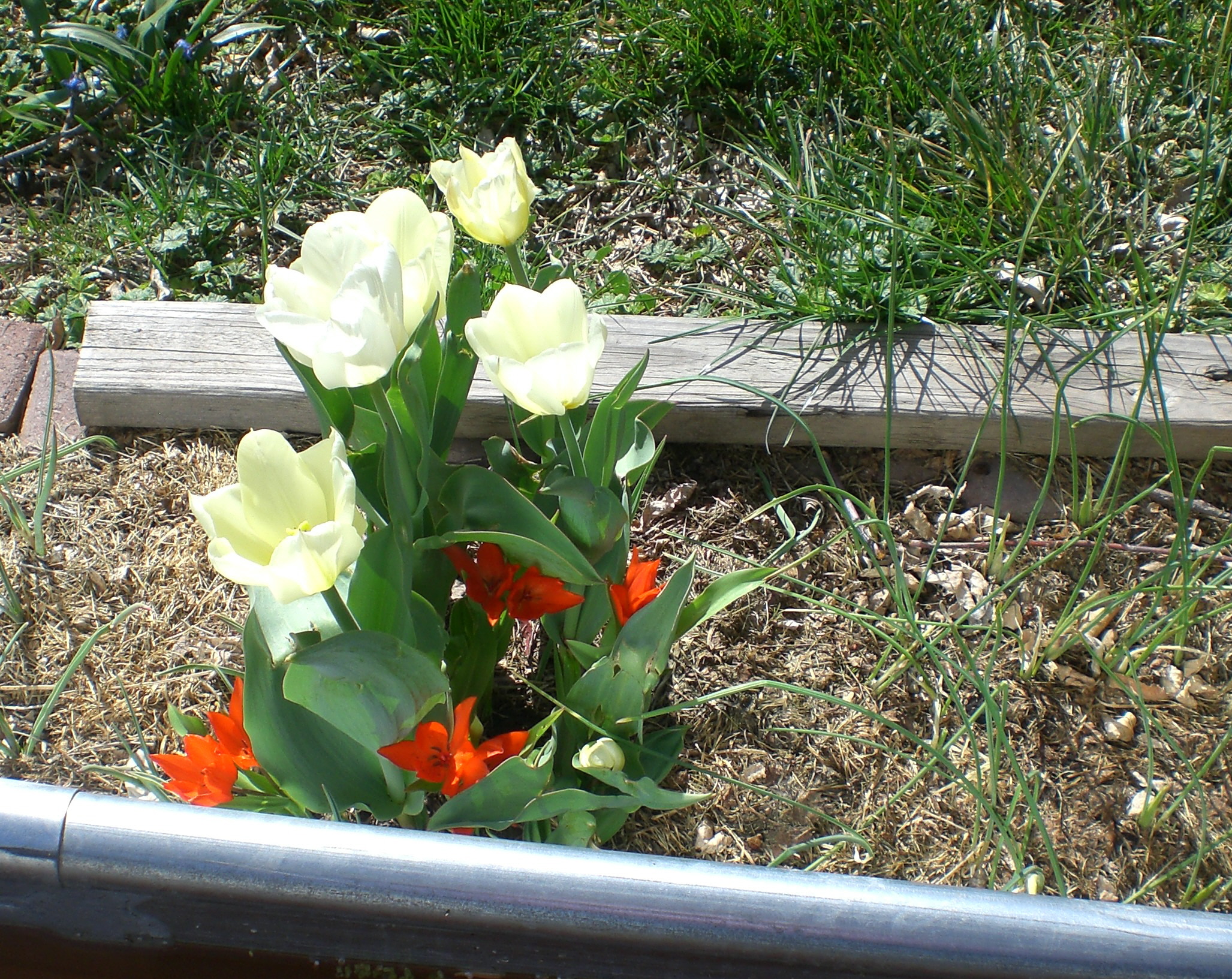
Tiny red/orange species tulips(T. clusiana chrysantha)  that I planted in the same hole with tall white emperor tulips(Purissima). They got snowed on yesterday morning, but have bounced back and are ready for more. I love Spring.

The native shrubs in the xeric bed (i.e. the bed I don’t water very much) are just about to bloom all over the place- so far the only one with open flowers is the golden currant.

Happy little flowers are almost open on the Golden Currant (ribes aureum)

 
I have seen some lilacs open around town, and an ornamental cherry tree blooming in the park, but so far, not in my yard. We got over an inch of moisture this week from our “rain-snow mix” so everything is greening up, and the bees are waking up. That doesn’t have anything to do with the moisture, though. Anyway, my last bloom is ubiquitous- and I like to believe that if you call plants by their latin name, they aren’t really weeds.

A bee gathering pollen on taraxacum oficianale (dandelion). Yeah, the Latin thing doesn't help...

Growing Flax for Fiber


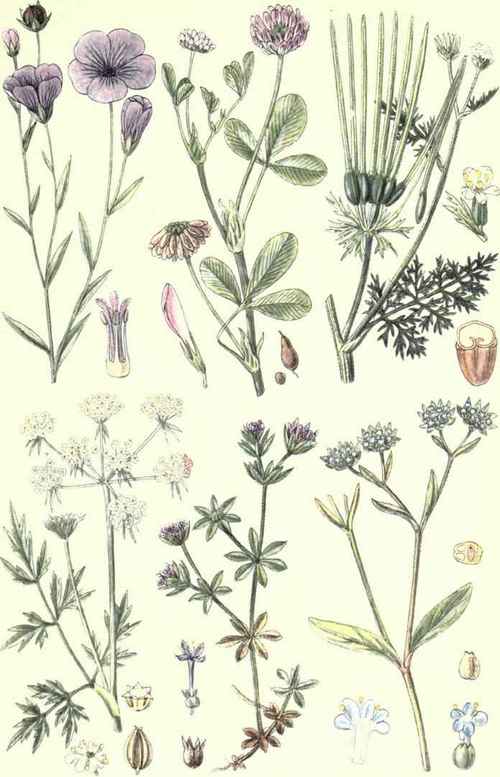
I love it when two nerdy habits intersect- here, gardening intersecting with love of fibery, knitty, spinny stuff. I ordered some flax seed from Pinetree Garden seeds- these are slightly different from the flax seeds that get added to smoothies for their nutritional properties- the varieties used for seed production are different from the variety used for making yarn. The Latin is Linum Usisittissimum- I love it when the Latin name of a plant is so transparent- “useful,” anyone?

herbal image from "Chttp://chestofbooks.com/flora-plants/flowers/British-Wild-Flowers-1/Flowers-Of-The-Cornfields-Plate-X.htmlhest of Books"

I’ve soaked the seeds overnight, and cleared a little spot in the xeric bed that doesn’t currently have anything in it. I scraped away the mulch, and chopped up the soil a little.  I sprinkled the seed, and now I need to keep it moist for… 20-25 days til it germinates.What? That really seems like a long time- probably not a typo on the seed packet, though. If it were a wetter spring, I wouldn’t be so worried, but it has been super dry here, so it has to be me with a watering can until they get established.

The flowers may be either blue or white, on 3-4 foot tall plants, with light, feathery leaves.

At the end of the summer, I’ll pull the plants, and learn how to process them- I’ve already seen some videos made by a living history museum, there seems to be a lot of pounding involved. Can’t wait!

Artichokes, an excuse to eat melted butter


Bubble, bubble...

When I was a kid and my mom would go out of town, my dad would make special dinners- the kind of thing that either she didn’t like, or that she considered too messy. Artichokes were sometimes on the menu for these meals. And, funnily, I don’t remember anything else on the menu those nights, that was the whole meal- just artichokes, dipped in melted butter.
Daddy would cook them in the pressure cooker, spread out newspapers on the top of the portable dishwasher in the middle of the kitchen, melt butter in a tiny pan on the stove top (it wasn’t before microwaves were invented, but it was before we had one) and we’d all stand around, ripping leaves off, dunking them in butter and scraping the flesh off with our teeth.
Once we got down to the chokes, the feathery tiny leaves that stick in your throat, my dad would trim them with a paring knife and distribute the pieces of heart fairly. Fairness in heart distribution was a big issue.
It’s the kind of thing that if you don’t have a childhood memory of it, you probably don’t eat. They are a bit of a pain to make, and eat, and dispose of, as well as looking intimidating in the produce section.  However, they are so good- rich in their own right plus extra good with the butter….  Can I suggest that you create a good memory of it? right now?
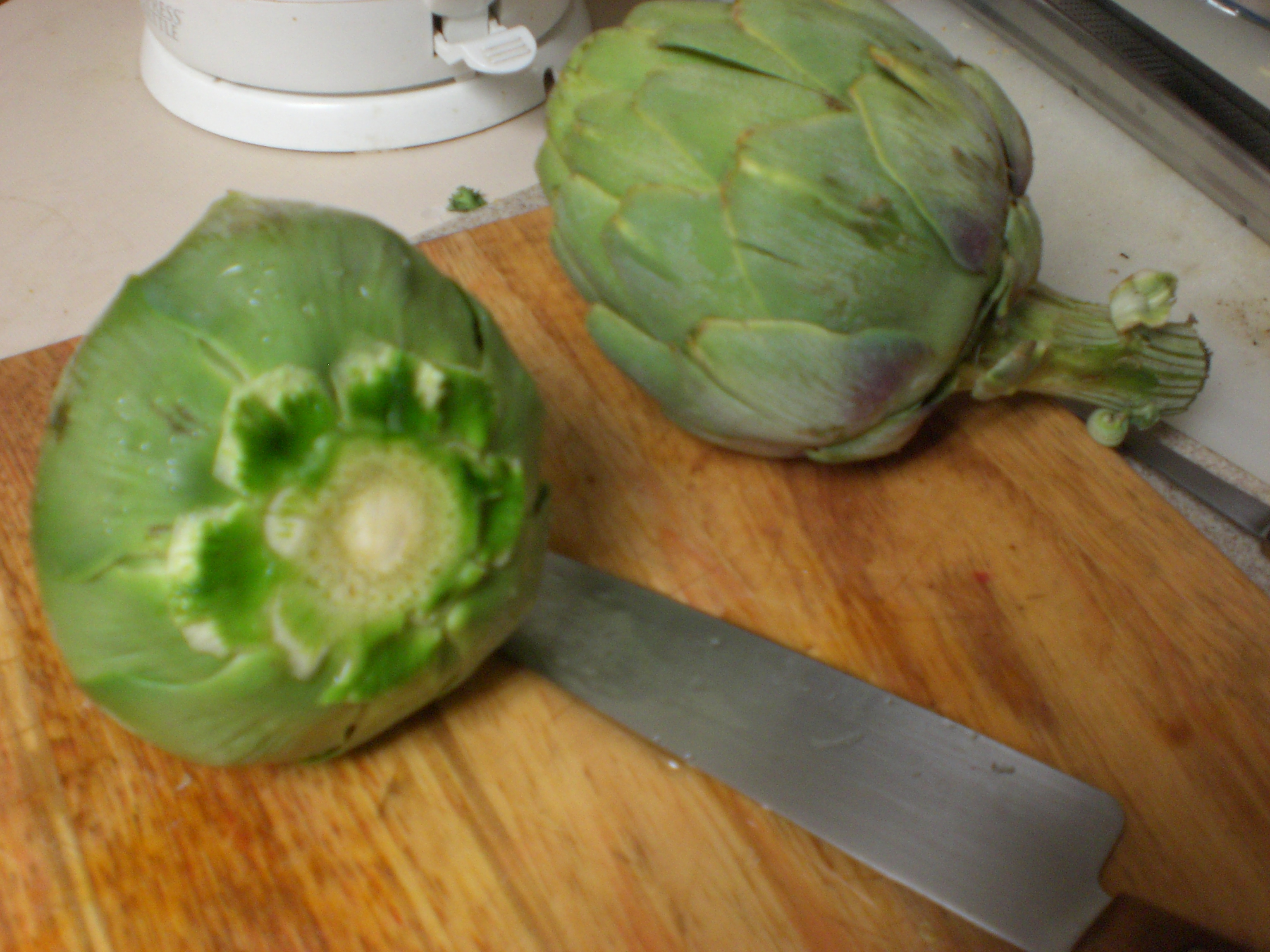
To cook- trim off the bottom stem, and the bottom row of leaves- these are tough anyway, and take forever to cook.

At our house, 3 of us like artichokes, and cooking 2 is enough.

Place in boiling water. I sometimes throw in a garlic clove, but not always. Boil until a knife goes into the stem end easily, about 20 minutes. Meanwhile, melt some butter (aren’t those some of the most beautiful words in the English language? right up there with “you look so much prettier without make-up” and “I’ve folded all the laundry”)
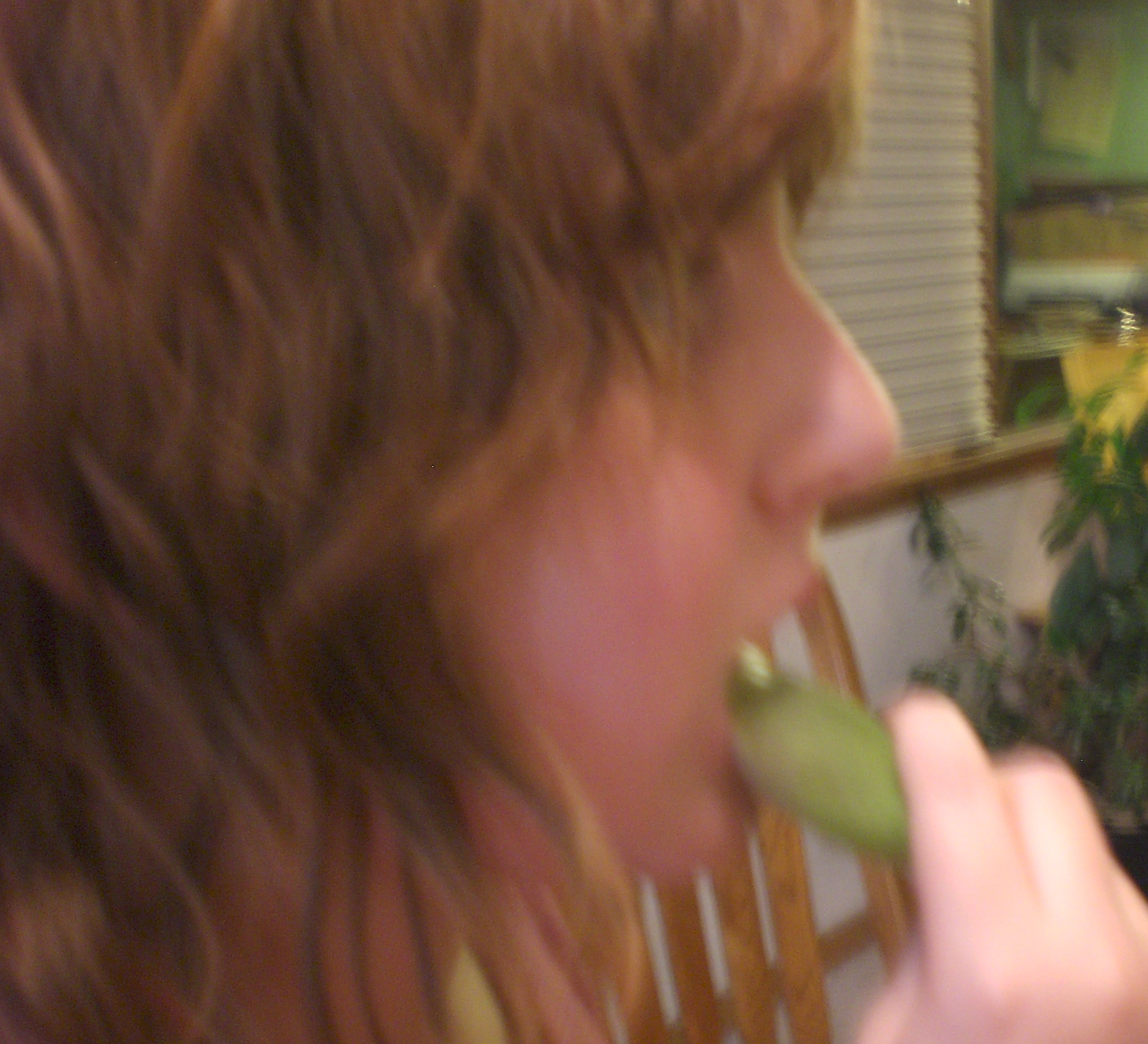
To eat, you pluck off the leaves, dunk in butter, then scrape off the soft stuff from the insides of the leaves with your teeth.

Turn the leaves upside down and scrape with your bottom teeth.

 The closer you get to the center, the more “soft stuff”  there is- once the tops of the leaves turn purplish, you can bite off the bottom 1/3rd of the leaf. 

Once you get to the stuff that looks like chick feathers, trim that off, and you have the heart- distribute it fairly. Sop it in the rest of the butter and enjoy.

I have tried to grow artichokes here in zone 5, and it is possible, although they don’t overwinter here. In warmer places, they are perennial, and produce more buds every year. I have read directions on the interwebs about pulling the roots at the end of the season, and storing them in the basement, the way people do with dahlias. I’ll try that this fall with the plant I have growing in the basement under lights.

Let’s move the compost bin


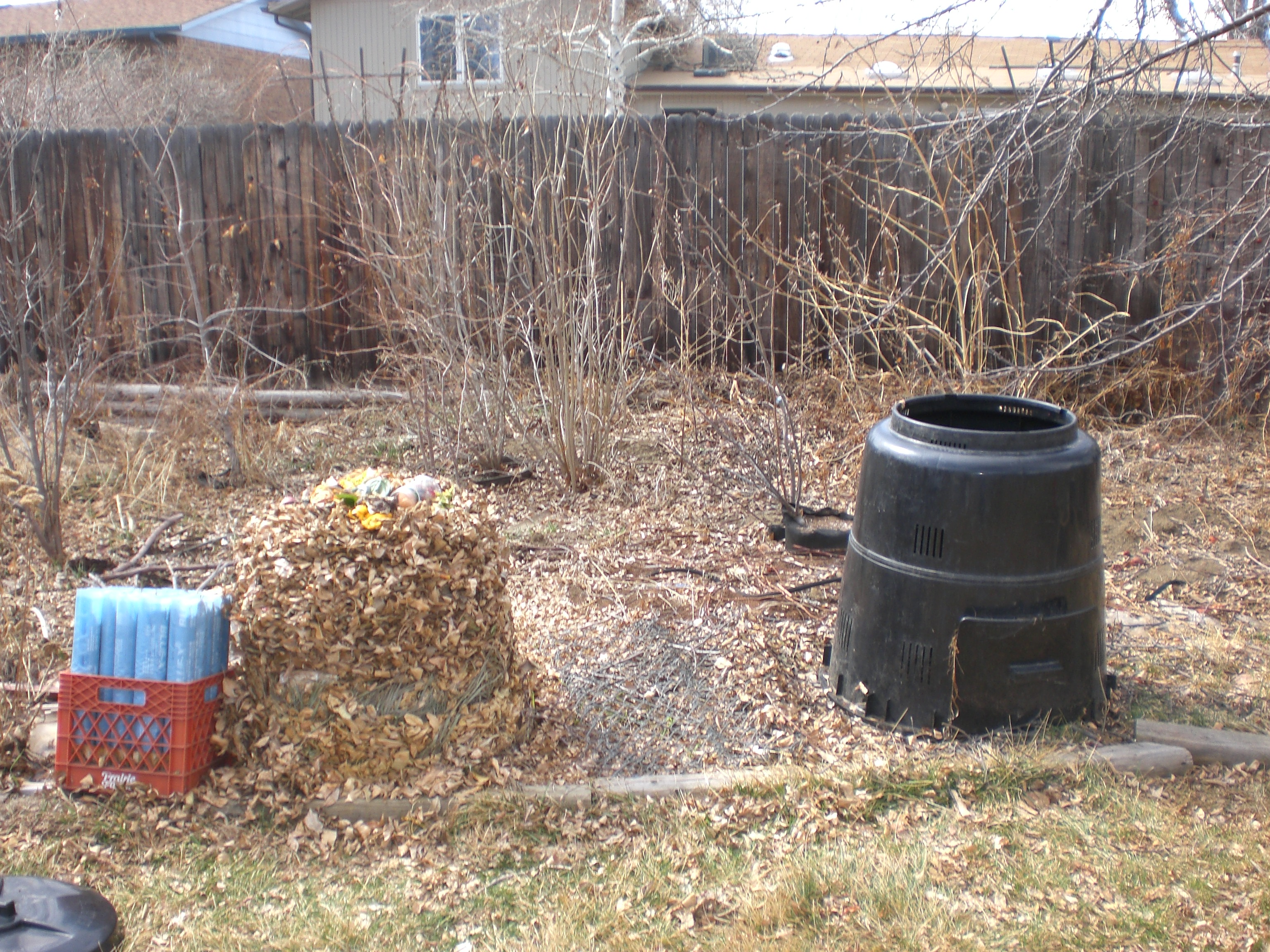
Conversation in the faculty lounge turned to compost the other day. I mentioned that the worm guy http://www.flickr.com/photos/vhayward/2917500802/  recommended moving the compost pile every six months to avoid tree roots growing up into the pile. One of my colleagues insisted that she was not going to take the time, not going to “get a sub so I can flip my compost pile twice a year!”   I didn’t argue with her- there is no arguing with some people, but honestly, you don’t need to take a day off work.

3 steps (maybe 4…)

1: lift bin off of old pile.

It's easy to slip the bin up off the pile, then scoot it a few feet over.

2. Put the most recent additions into bottom of bin in new location.

That's not compost yet, that's just gross. Needs more time.

3. Use finished/almost finished compost on plants.

There are still some identifiable chunks in here- leaves, of course, and flower stalks.

(4 might be add water to new pile, depending on what hasn’t broken down. I dipped buckets out of the fish pond, which also helped empty the fish pond.)

Moving the pile adds oxygen, which will help things break down. Mine had a lot of leaves that had matted, and some identifiable avocado pits- they take a long time, but eventually, everything breaks down. I guess step 5 might be to wash your hands and get a glass of iced tea. It really is pretty easy. 20 minutes start to finish, and that includes taking pictures.

I want to live in a conservatory


I ordinarily don't like red, but this warmed my soul.

We went to the Denver Botanic Gardens last week- the kids had the day off school, so I got a sub so we could have an adventure.
DH had a conference in Denver, so we loaded up the car and went down. We were prepared for the worst,  “bring coats, wear a fleece!” I said as we left the house, but we were graced with amazing weather.

I’ve been to the gardens a couple of times, and this time I bought a membership, so I can go again. I’ll drag other people, too, so beware! Or, wait patiently for an invitation…
You would think that February is an unlikely time to tour a Botanic Garden, but I planned it knowing that the conservatory has at least an hour’s worth of hanging-around time. Everytime I go there, I wish my house was a greenhouse. Not a sunroom, or a lean-to.   I want to live in a conservatory.

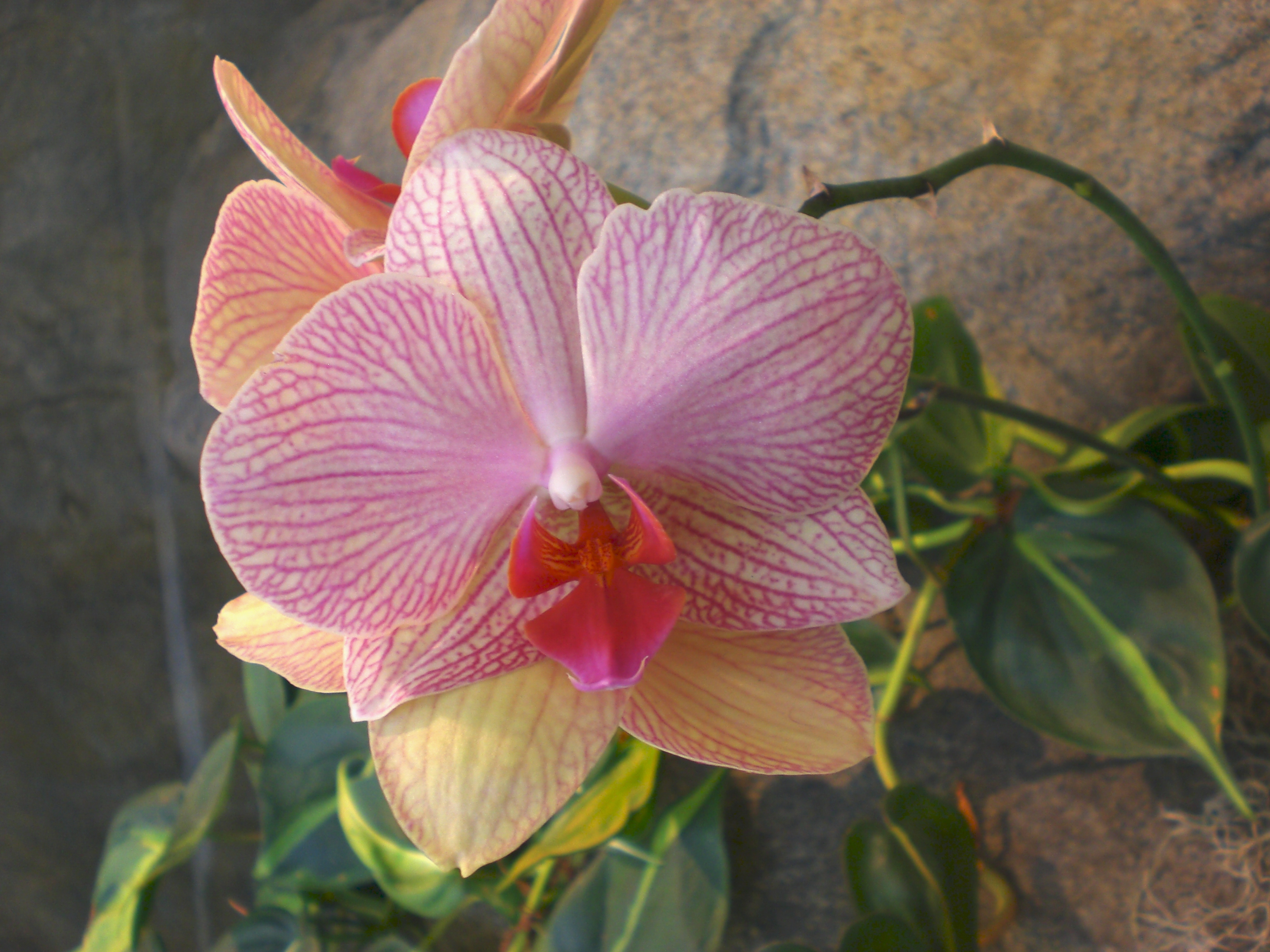
Marni's Pavilion has a rotating orchid display.

 Lots of things were in bloom, it was warm and humid. Perfect for a February day, with uncertain weather predictions.We saw banana trees, and pineapples and bamboo, and a waterfall. And orchids! Love orchids.

I’ll sort through the outdoor pictures and post about them another time- it turns out we couldn’t have picked a better day- sunny with no wind. Today I want to share the flowers in the conservatory. Aah. Orchids.

There were four or five of these sprays of dangling orchids, moving in the breeze from the fans. Amazing.

Seed Catalogues


Seed catalogues have been piling up in the mailbox, and on the coffee table for a couple of weeks now. Pinetree Garden Seeds was the first to arrive, and has the most post-it notes, but Nichols’Garden Nursery is running a close second. I love Nichols’ emphasis on herbs, but also love Pinetree’s multiple pages of gadgets. Leaf Claws? does anyone need leaf claws? Not really, but fun to read, as the days get longer, and I can start calculating when I can plant early things like sweet peas or potatoes, or sugar snap peas. Territorial is good too- they have 29 varieties of garlic- with a brief discription of each, teliing aboout growing requirements and flavors. 29, really? Do most of them just taste like garlic? I’d have to wait to get them in the fall, though, because Territorial only ships garlic bulbs in the fall, so I probably won’t order- delayed gratification is bad enough when I send off a check and order, and don’t get seeds for a couple of weeks. High Country Gardens is my favorite for perennials for the dry west- the nursery is based in Santa Fe, and they are really great about explaining what grows here, and why. I should probably order something from them this year, to stay on their mailing list. This sounds crazy- don’t most people want to get off mailing lists? All of these companies have a web presence, if you don’t have catalogues clogging your mailbox.

My stack of magazines, with sticky notes. Time will tell if Asparagus seeds make it on to the order.

I (accidently) grew a sweet potato!


Way back last summer, there was a sweet potato sprouting in the bin, so I chucked it into an empty flowerpot, with some soil, of course, and put it out on the patio. Sweet potatoes have pretty, heart shaped leaves, and I enjoyed the greenery all summer, honestly not expecting it to have enough soil or water, or warmth, to produce tubers. I didn’t even check at the end of the summer.
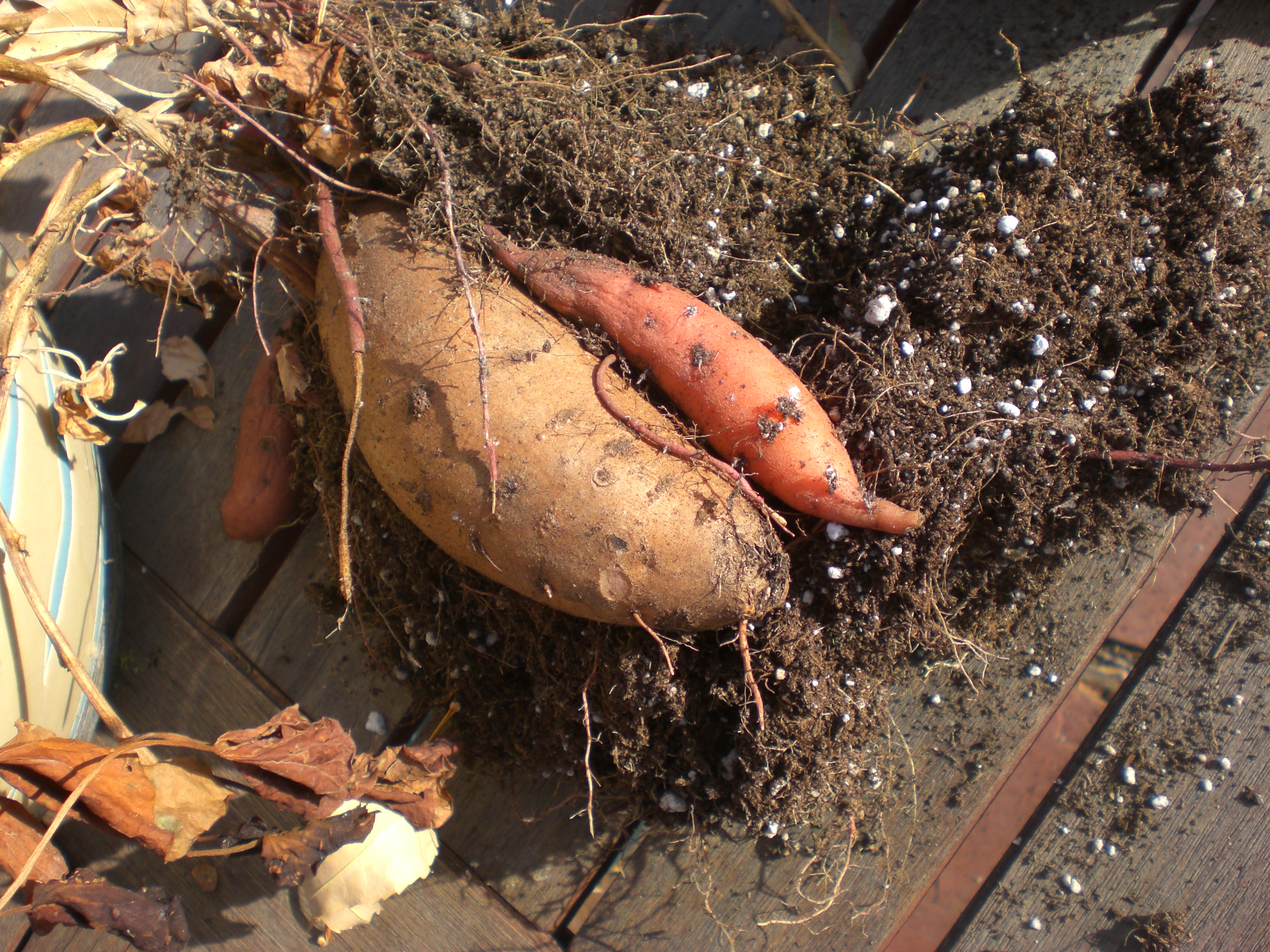
Today it’s warm and sunny, so I went out to do some fall clean-up which I should have done when it was actually fall, and emptied out the pot with the sweet potato plant. Imagine my surprise to see an actual sweet potato. there were a couple of small mushy ones, but one was the size of one you’d see at a grocery store. I’m going to eat it on Christmas.

The leaves froze sometime in October, but the tuber stayed alive in a 10 inch flowerpot.

Hillbilly Goldfish Pond


I keep upgrading my water gardens- I started with a galvanized washtub, which held pretty much 1 fish and some floating plants, then I got a plastic liner for a whiskey barrel, which had space for 2 fish and some floating plants. 

This year, I invested my fortune in a horse trough, which holds about 130 gallons of water, lots of plants and 10 goldfish. At least at the beginning of the year it had 10 goldfish. There’s been some attrition.  oooh, shiny.

Birds love any water feature, no matter what size, and in the years since I have been putting in container ponds, more and more birds have come to the yard.

I have made a concious decision not to have a pond in the ground- for one thing, I think it shrinks the pond.  My tank takes up a good amount of space in the landscape- it provides a structure, a shiny backdrop, a formal oval of water reflecting the sky.  Most naturalistic ponds don’tlook very natural to me, unless they are a lot huger than I have space for.  I think A 130 gallon in-ground pond would look puny and insecure in my garden. When I chose the galvanized metal tank, I decided that I wanted it to not look naturalistic- I wanted the informal formality of an above ground pond. When we had a party this summer, we put in floating candles. It looked magical.

Intalling was easy- I leveled out the place I wanted it to go, digging out the weedy grass next to the patio, and stretching space out- there is a foot wide tulip bed to the west of it, where tulips and irises will help conceal the metal. 

Maintainance is easy, too, maybe too easy, considering how many fish have died this summer.  I dip my watering can in every few days to water tomatoes and potted plants, then top the tank up with a hose. Water hyacinth and a papyrus provide filtration and ogygenation for the fish, and mosquito larvae provide a food source. I don’t have a fountain, because I haven’t wanted to deal with the hassle of electricity. In the future, maybe solar fountain technology will improve, but for now, it is a still water pond.

Fall is here, and the weather is too cold for the water hyacinth and I have moved the papyrus in for the winter.

Previous Older Entries Next Newer Entries